
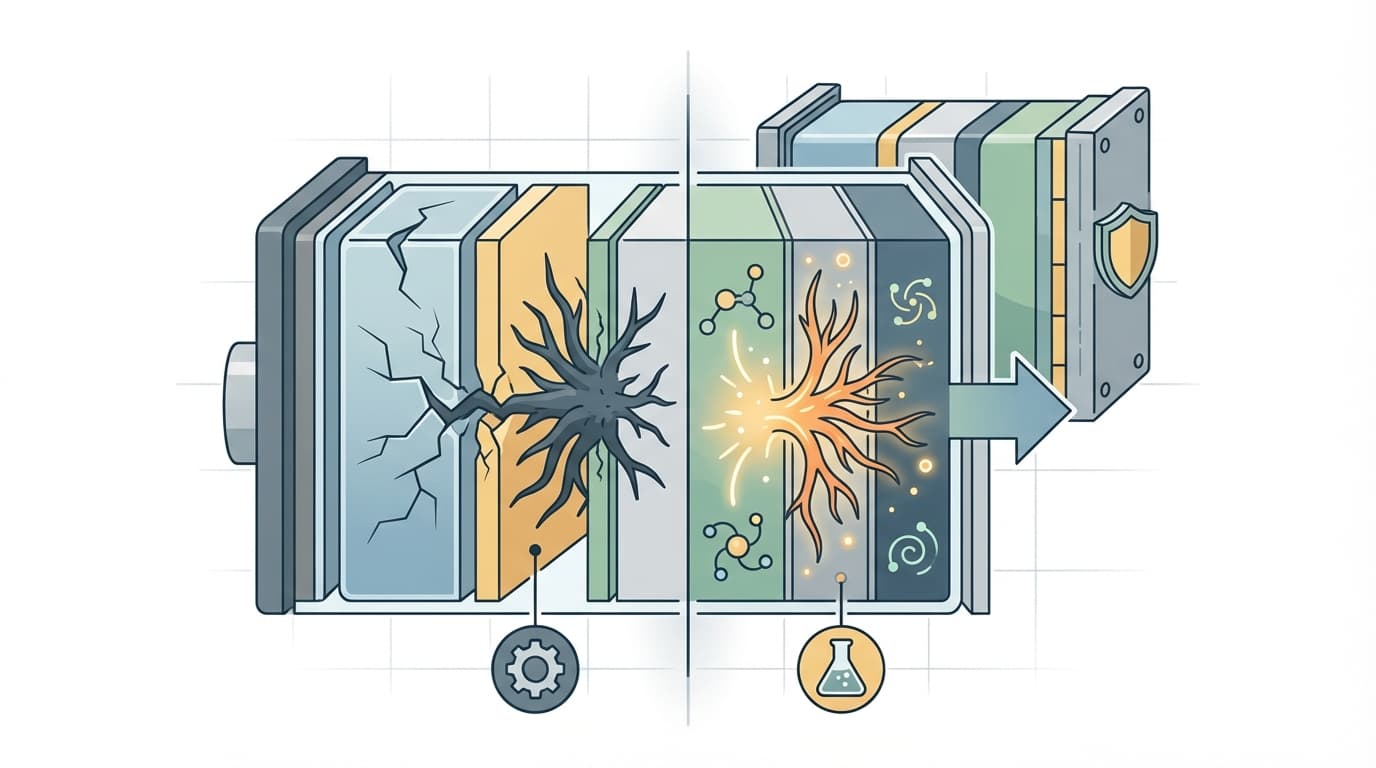
A major study published in Nature in March 2026 has changed battery science. Researchers found that chemical processes help dangerous structures grow inside batteries. These tiny, tree-like structures are called dendrites. They can damage batteries and even cause safety problems. This discovery could lead to better battery designs in the future.
Scientists previously believed that dendrites grew only under extreme physical stress. However, the new research shows they can grow at much lower pressure. In fact, dendrites formed at stresses up to 75% lower than expected. Surprisingly, faster-growing dendrites actually experienced less physical stress. The solid material around them was weakened by chemical decomposition instead.
The research team used advanced imaging techniques to study this process closely. One method measured real-time stress around growing dendrites inside the battery. Another technique used extremely cold temperatures to observe chemical changes at tiny scales. These tools revealed that the battery material shrank and became brittle. This brittleness allowed dendrites to push through the material more easily.
The study was conducted by researchers primarily from MIT and Thermo Fisher Scientific. Their findings reveal a crucial link between chemical and mechanical stability in batteries. If battery makers understood this process better, they could design safer products. The authors suggest that controlling chemical changes could potentially mitigate the dendrite problem.