
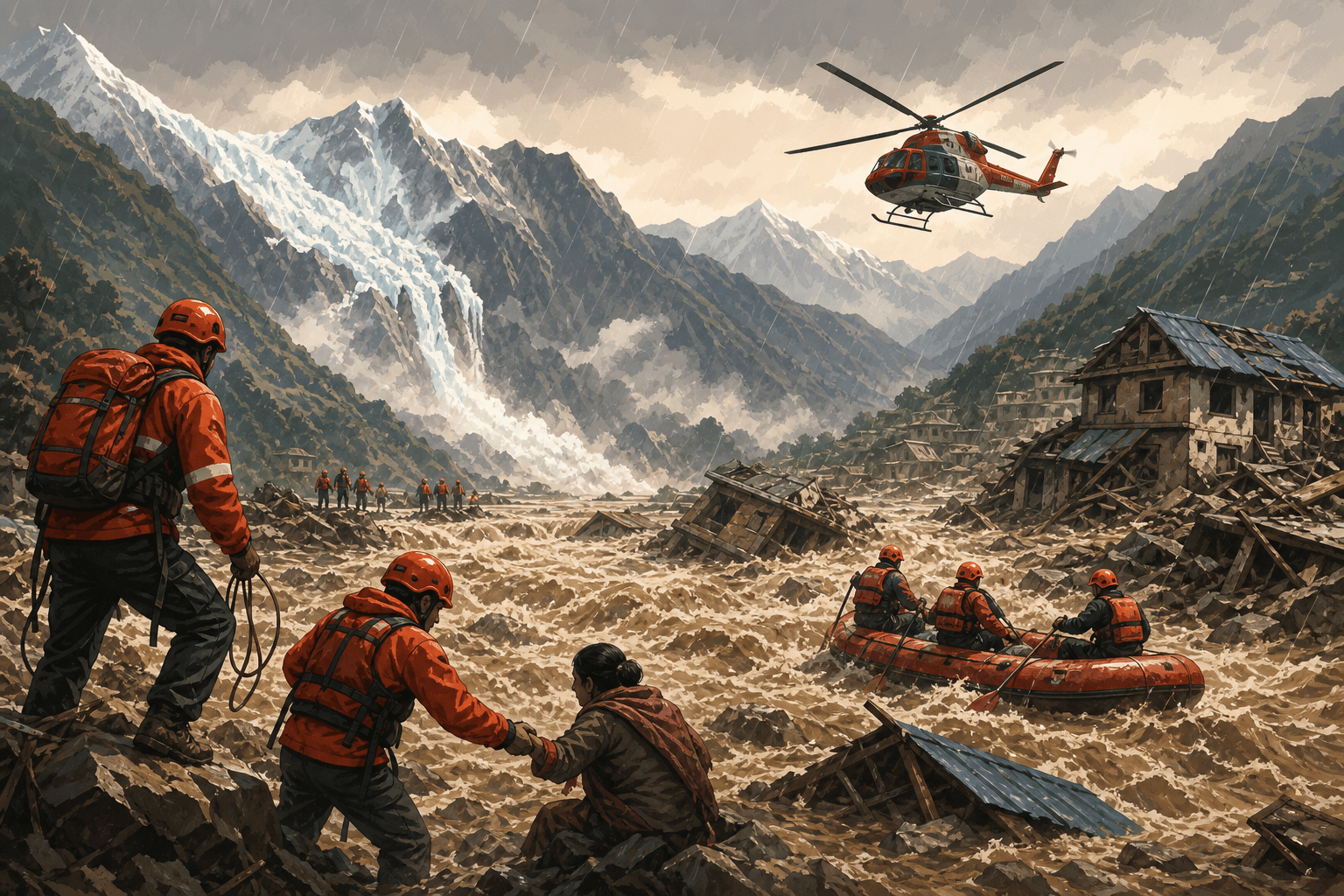
Nepal is facing one of its worst natural disasters in recent history. On August 26, a glacier collapsed near the Nepal-Tibet border. This sent a massive wall of water and mud through river valleys. The flash floods destroyed homes, bridges, and roads along the Trishuli River. More than 700 people have been confirmed dead so far.
Rescue operations have been extremely difficult due to the rough terrain. Helicopters are being used to reach communities that are cut off. The United Nations has said that aid delivery is extremely challenging. More than 8,000 people have been rescued, but thousands remain missing. Families are waiting anxiously at relief centers for news.
Scientists believe the disaster was triggered by a collapsing glacier. Climate change is making glaciers in the Himalayas increasingly unstable. Experts warn that similar disasters could happen more frequently in the future. The monsoon season has made the situation even worse. Additional rainfall has raised water levels in rivers across the region.
Several countries have offered humanitarian assistance to Nepal. India has sent over 57 metric tons of relief supplies. China, Japan, and Australia are also providing support. Nepal's government has asked for specialized help with tunnel rescue operations. Aid workers say the recovery process will take many months ahead.