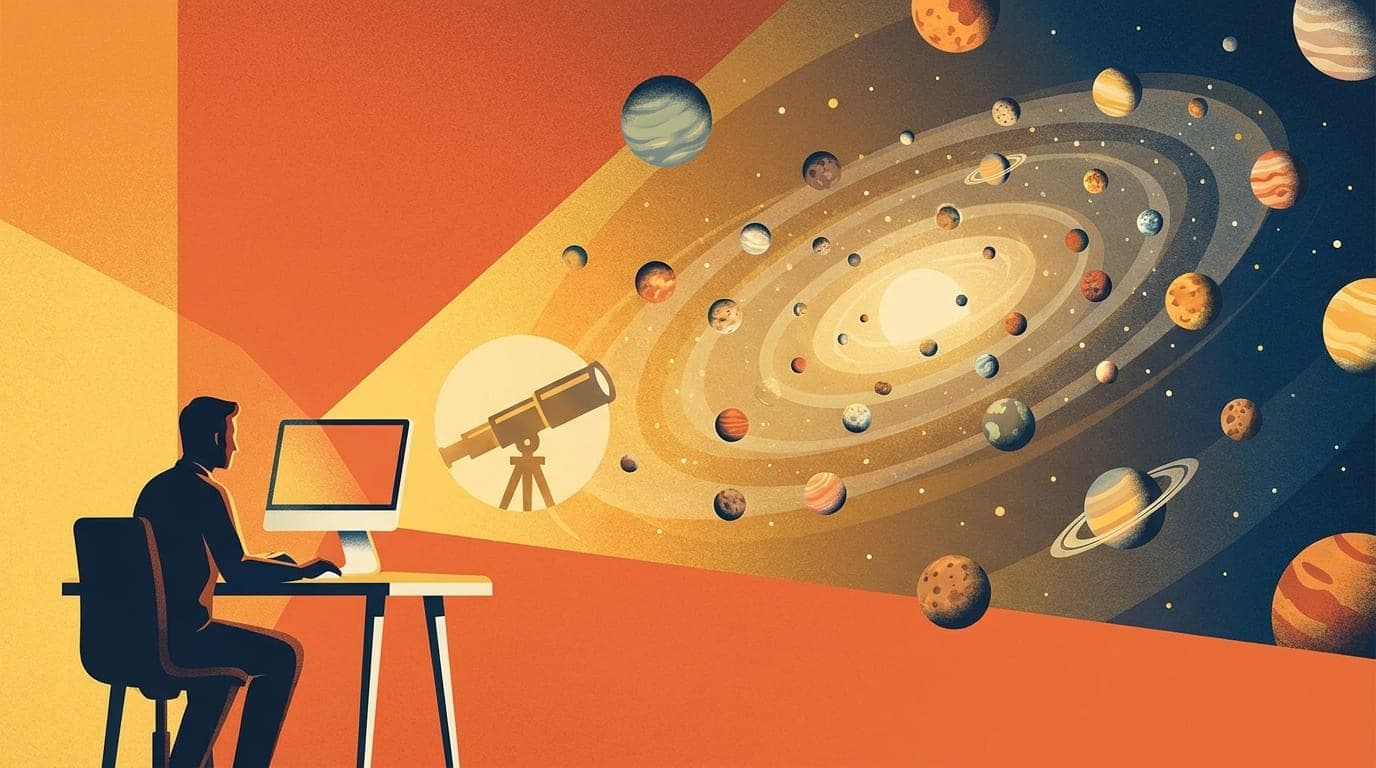
Have you ever wondered what planets beyond our solar system look like? NASA has built a fascinating online tool called Eyes on Exoplanets. It is a free 3D interactive experience available to everyone. Users can visit stars where scientists have confirmed the existence of other worlds. The tool even shows how long a trip to each planet would take.
Scientists have now confirmed more than 6,000 exoplanets in our galaxy alone. These distant worlds come in remarkable variety. Some are rocky planets similar to Earth, while others are enormous gas giants. Researchers have also identified planets that sit in habitable zones around their stars. In these zones, liquid water could potentially exist on a planet's surface.
The Eyes on Exoplanets tool is updated regularly with the latest discoveries. Users can spin planets around and see artist's concepts of each world. You can also view the night sky from your own location on Earth. The tool highlights stars that future space telescopes will investigate for signs of life. It was designed to make complex space science accessible to ordinary people.
If more people explored tools like this, public interest in science would grow significantly. Citizen scientists have already contributed thousands of observations to NASA's research. The James Webb Space Telescope continues to reveal new details about distant atmospheres. Experts believe that studying exoplanets could eventually answer whether we are alone. The search for life beyond Earth has never been more exciting.