
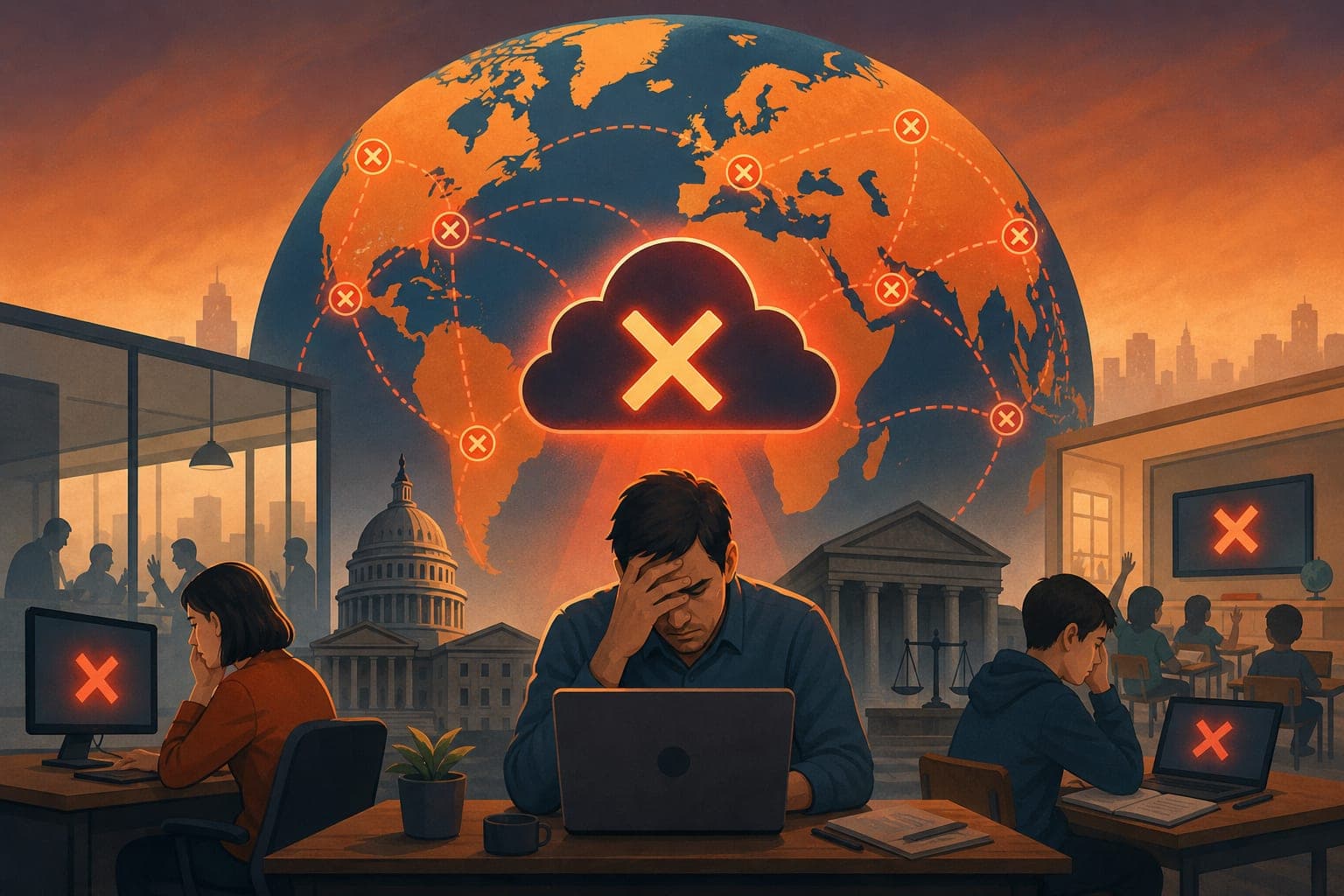
On November 12, a huge Microsoft outage disrupted daily life across the globe. Outlook email, Teams, and other key services suddenly stopped working. The problems started around noon on the US East Coast. Within an hour, people in 74 countries had reported issues. As many as 430 million users were reportedly affected.
The outage caused widespread chaos in workplaces and schools. In the United States, frustrated workers at some companies went home early. In Australia, businesses could not print invoices or hold meetings. Some schools could not hold online classes on Friday. Courts lost their live feeds, and governments told people to call.
Microsoft said the outage was caused by a technical issue. The company confirmed it was not a cyberattack. A network change had overwhelmed servers, causing them to stop working. Recovery was slow, and the disruption lasted more than 18 hours. Microsoft apologized and said the outage could cost billions in lost productivity.
This incident highlights how dependent the modern world has become on cloud services. If one company's system fails, entire industries can grind to a halt. Many experts believe organizations should have backup plans for such situations. Without alternatives, even a brief outage can cause enormous damage. The event has started a global conversation about digital safety.