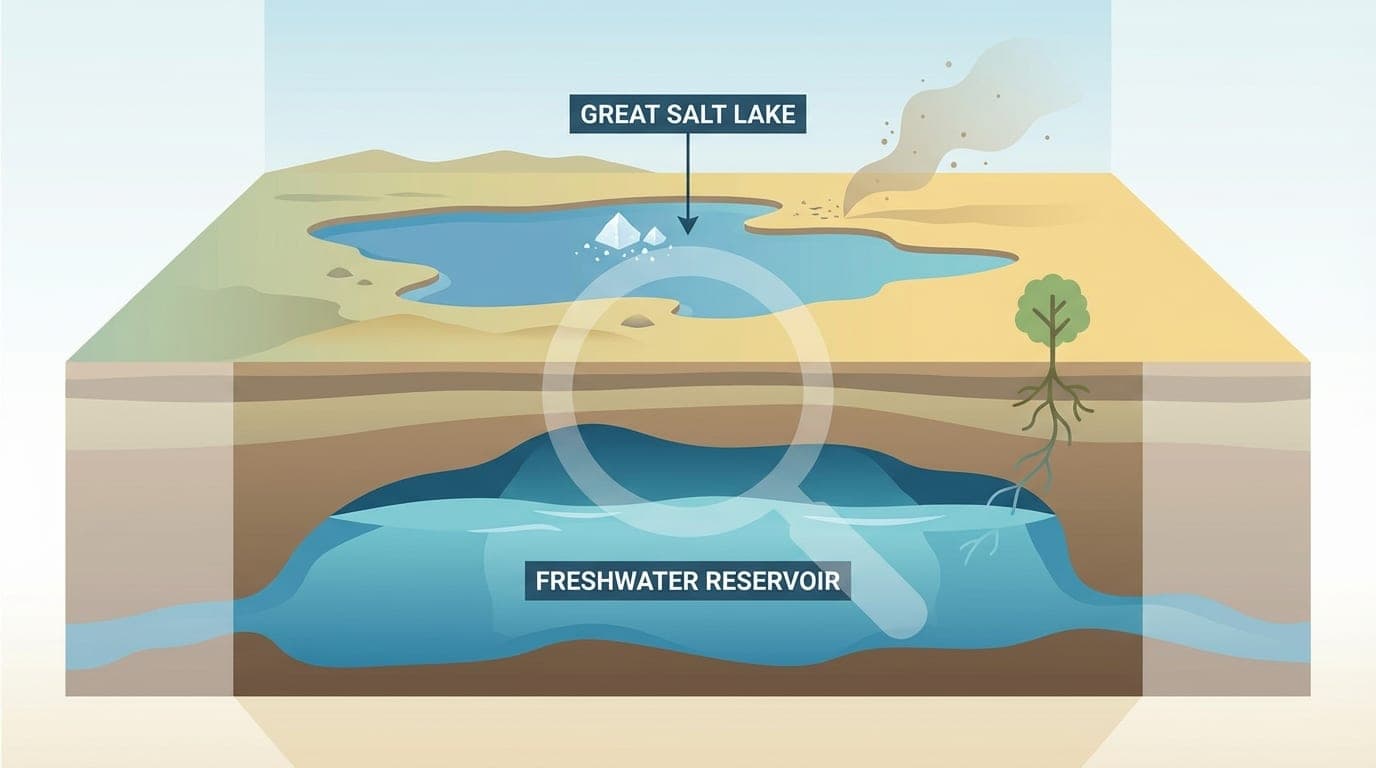
A remarkable discovery has been made beneath one of North America's saltiest lakes. Researchers from the University of Utah have identified a massive freshwater reservoir hidden under the Great Salt Lake. The study, which was published in Scientific Reports, used advanced airborne electromagnetic surveys. These surveys were conducted by helicopter over the Farmington Bay area. The findings have challenged what scientists previously understood about underground water systems.
The research team found that freshwater fills the sediments beneath the lake's salty surface. The reservoir could extend to depths of 3 to 4 kilometers underground. This is approximately 10,000 to 13,000 feet below the surface. Scientists had expected freshwater only at the edges, where mountain water flows down. However, the data revealed that freshwater extends far toward the lake's interior.
The discovery had initially been suggested by mysterious circular mounds on the dry lakebed. These reed-covered formations appeared where pressurized groundwater was pushing upward through the salt layer. Had researchers not investigated these unusual features, the reservoir might have remained undetected. Some of this ancient groundwater may date back thousands of years to the Ice Age.
The finding could have significant practical implications for the surrounding region. As the Great Salt Lake has continued to shrink, exposed lakebeds have released harmful dust. This toxic dust regularly blows into nearby urban areas across Utah. Researchers believe the freshwater could potentially be used to dampen dangerous dust hotspots. Nevertheless, scientists emphasize that this underground system must be fully understood before any extraction begins.