
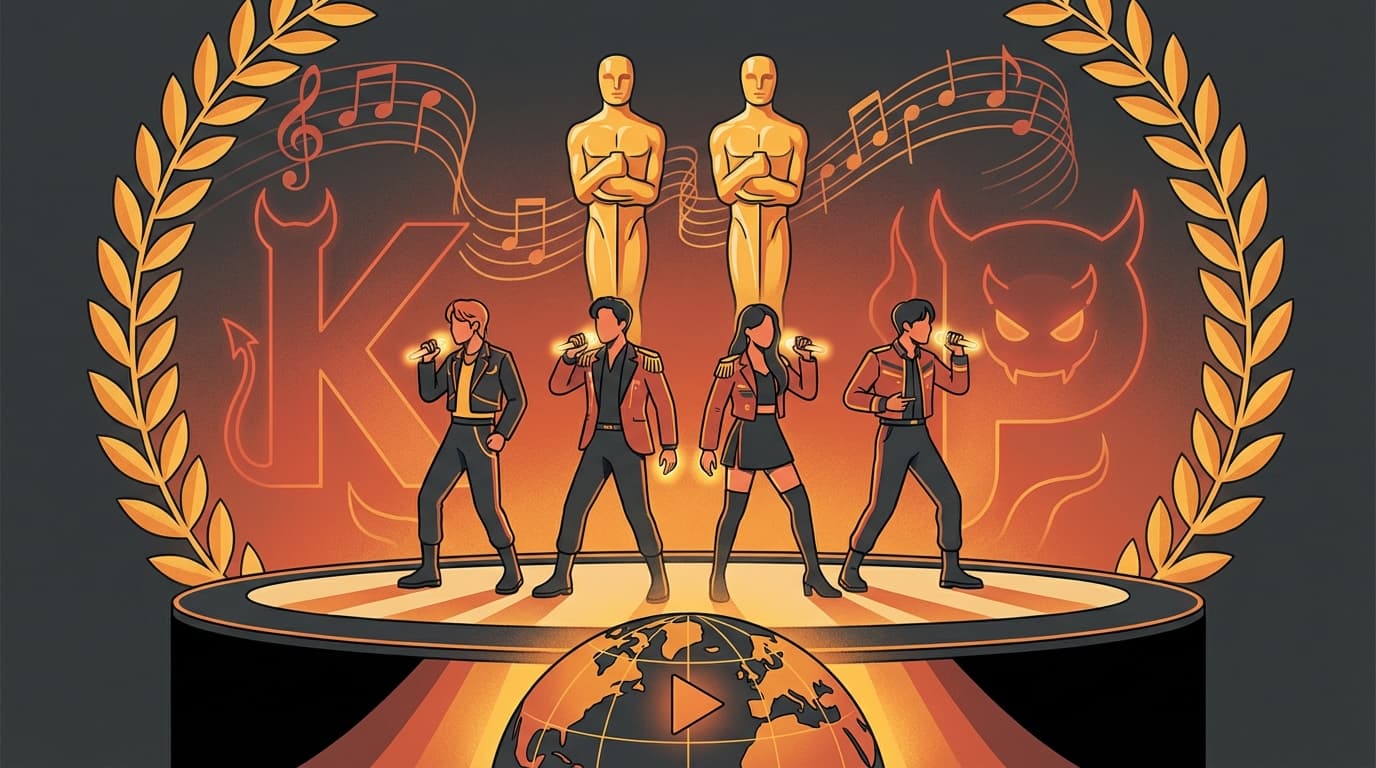
A Netflix animated film has achieved what few could have predicted. KPop Demon Hunters, which follows a fictional K-pop girl group that secretly battles demons, won two Oscars at the 98th Academy Awards on Sunday night. The film took home awards for Best Animated Feature and Best Original Song. Its hit track "Golden" became the first K-pop song to ever win an Oscar. Co-director Maggie Kang dedicated the milestone victory to "Koreans everywhere."
The film's unprecedented success had already been building for months before the ceremony. Since its debut on Netflix in June 2025, it has accumulated over 500 million views. That figure made it the most-watched title in Netflix history, surpassing even Squid Game. Its soundtrack also dominated the Billboard charts with four simultaneous Top 10 songs. A special sing-along theatrical version even reached number one at the box office.
What makes this achievement particularly remarkable is the film's cultural significance. KPop Demon Hunters originated from director Maggie Kang's desire to celebrate her Korean heritage. The story blends elements of Korean mythology, demonology, and K-pop music. Had the filmmakers not taken such a bold creative risk, this cultural breakthrough might never have occurred. The film has been credited with furthering the global Korean Wave movement.
Looking ahead, Netflix has already confirmed a sequel with the original directors returning. The film's influence extends well beyond entertainment, having sparked increased tourism to Seoul. Its triumph at the Oscars, the Grammys, and the Golden Globes demonstrates that culturally specific stories can resonate universally. For many, this victory represents a transformative moment for representation in mainstream cinema.