
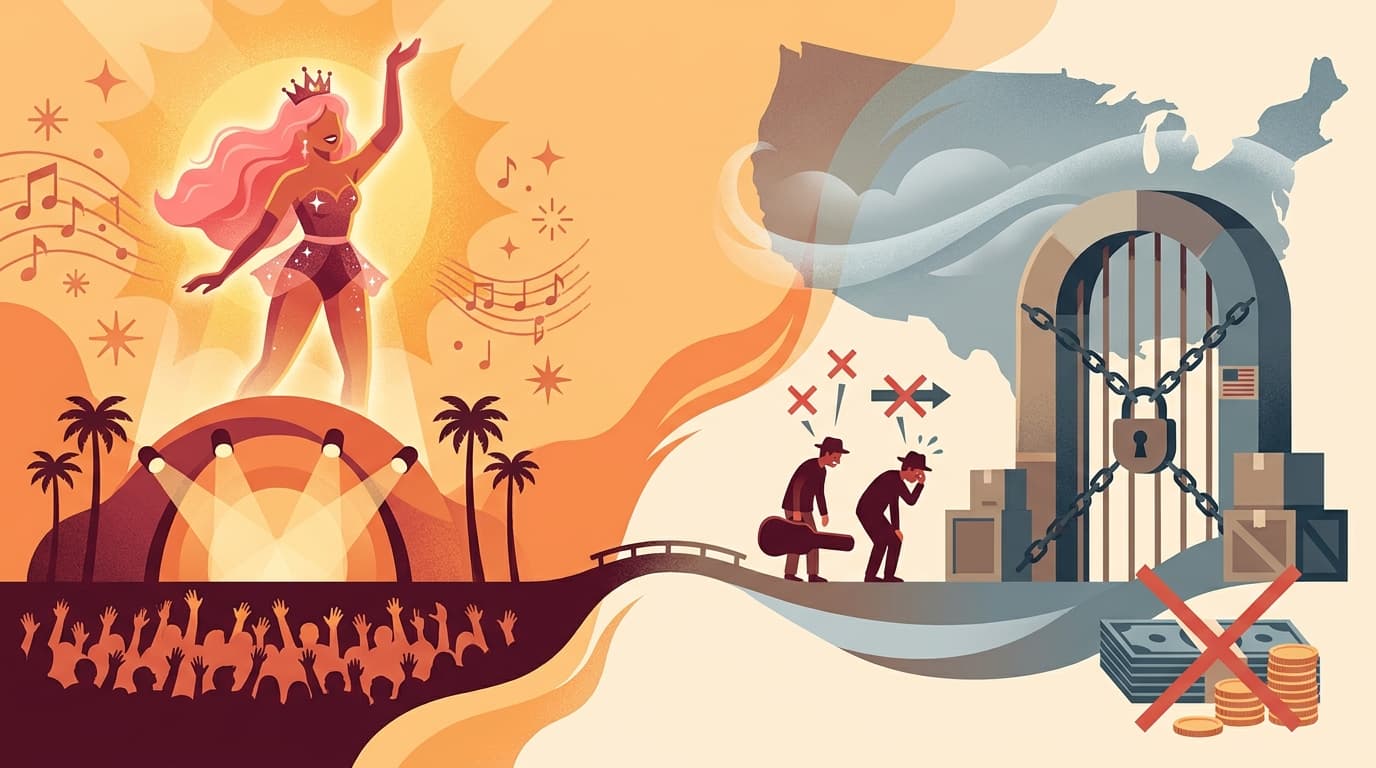
Karol G recently made history as the first Latina to headline Coachella. Tens of thousands watched her perform live, and millions more streamed it online. She told the crowd to feel pride, not fear. However, her triumph highlights a growing contradiction in the music world. While superstars like Karol G can still fill massive stages, many smaller foreign acts are abandoning plans to tour the United States.
The barriers facing international musicians are both financial and bureaucratic. Visa fees for artists have risen sharply, now costing over $1,615 per application. Processing times have also increased dramatically in some states. One booking agent explained that bringing a single group costs over $10,000 upfront. If the visa is denied, that money is simply lost. Industry experts report that dozens of artists are now canceling U.S. tours entirely.
Immigration enforcement has created what experts call a chilling effect on touring. Several major acts have had their visas revoked unexpectedly. The Grammy-winning group Tinariwen canceled a tour after new travel restrictions were imposed. Even established Latin artists have faced sudden cancellations. Pollstar data shows U.S. concert numbers dropped about 17% in early 2026. This decline suggests that fewer international artists are willing to take the risk.
The situation raises serious questions about cultural exchange through music. If only the biggest superstars can afford to tour the U.S., emerging talent may never reach American audiences. Some industry voices believe the live music map is becoming more polarized. Karol G herself acknowledged the tension, saying artists fear losing their visas for speaking out. Her Coachella moment was a celebration, but it also revealed deeper challenges beneath the surface.