
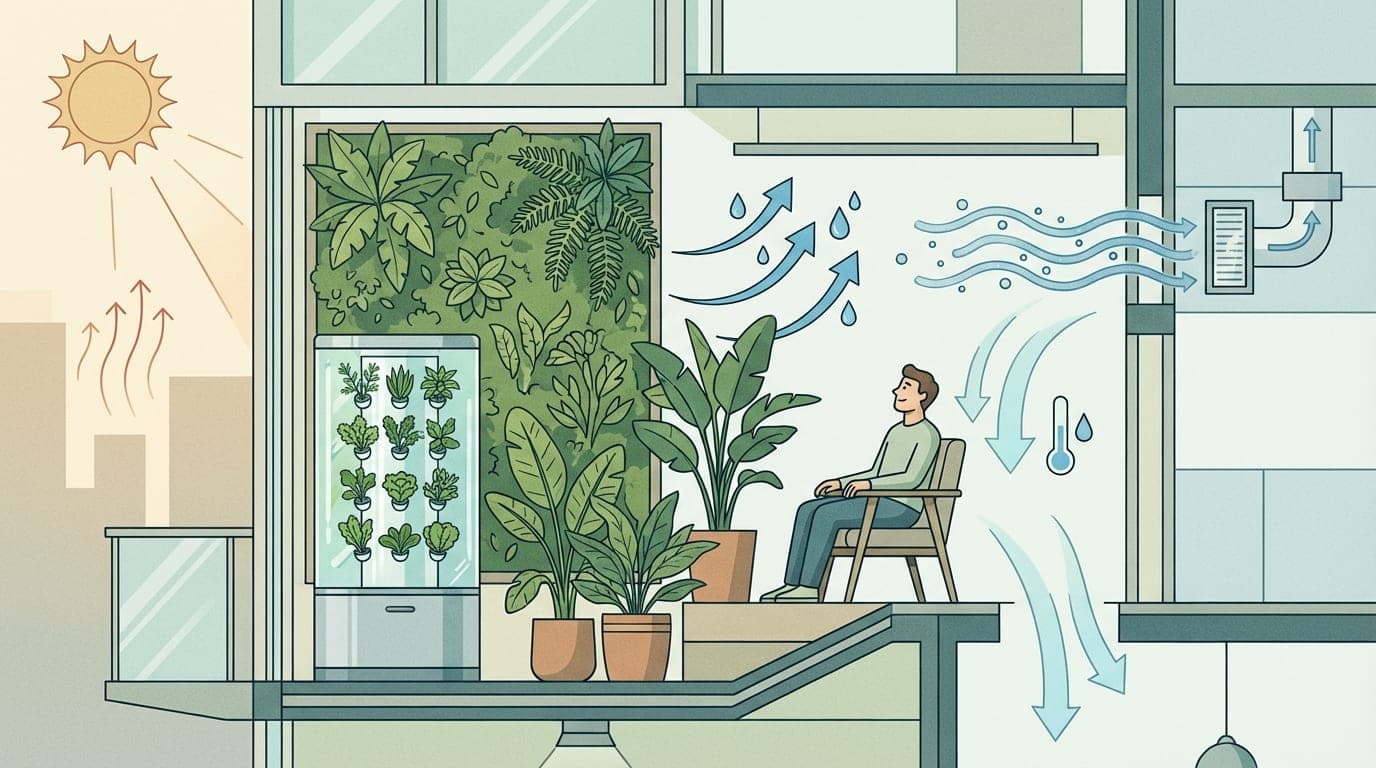
People spend approximately ninety per cent of their lives indoors. Despite this remarkable figure, scientists had not thoroughly examined how plants affect indoor environments. A new study, which was published in the journal Building and Environment, has now addressed this gap. Led by the University of Surrey, the research involved thirty-five experts from multiple countries. Their findings indicate that indoor plants offer significant environmental benefits.
The researchers examined three types of indoor vegetation: standard houseplants, living walls, and hydroponic towers. Their analysis revealed that larger greening systems can make spaces feel up to two degrees cooler. This improvement in thermal comfort occurs even when actual air temperatures remain unchanged. Furthermore, some engineered systems were found to reduce fine particulate matter and volatile compounds. These pollutants had previously been difficult to manage without mechanical systems.
Professor Prashant Kumar, the lead author, emphasised that these benefits do not happen by accident. He argued that plants must be treated as environmental infrastructure rather than mere decoration. The right lighting, maintenance, and system design are all essential for achieving meaningful results. The study also highlighted that indoor greenery may enrich the microbiome by introducing beneficial microbes. Had earlier research been conducted in real buildings, this knowledge might have emerged sooner.
The study has nonetheless identified important limitations in existing research. Many previous experiments had relied on unrealistic numbers of plants or controlled laboratory conditions. The authors consequently called for long-term studies conducted inside actual homes and offices. If building designers were to integrate plants systematically, indoor environments could become substantially healthier. This research ultimately suggests that greening our indoor spaces is crucial for climate resilience.