
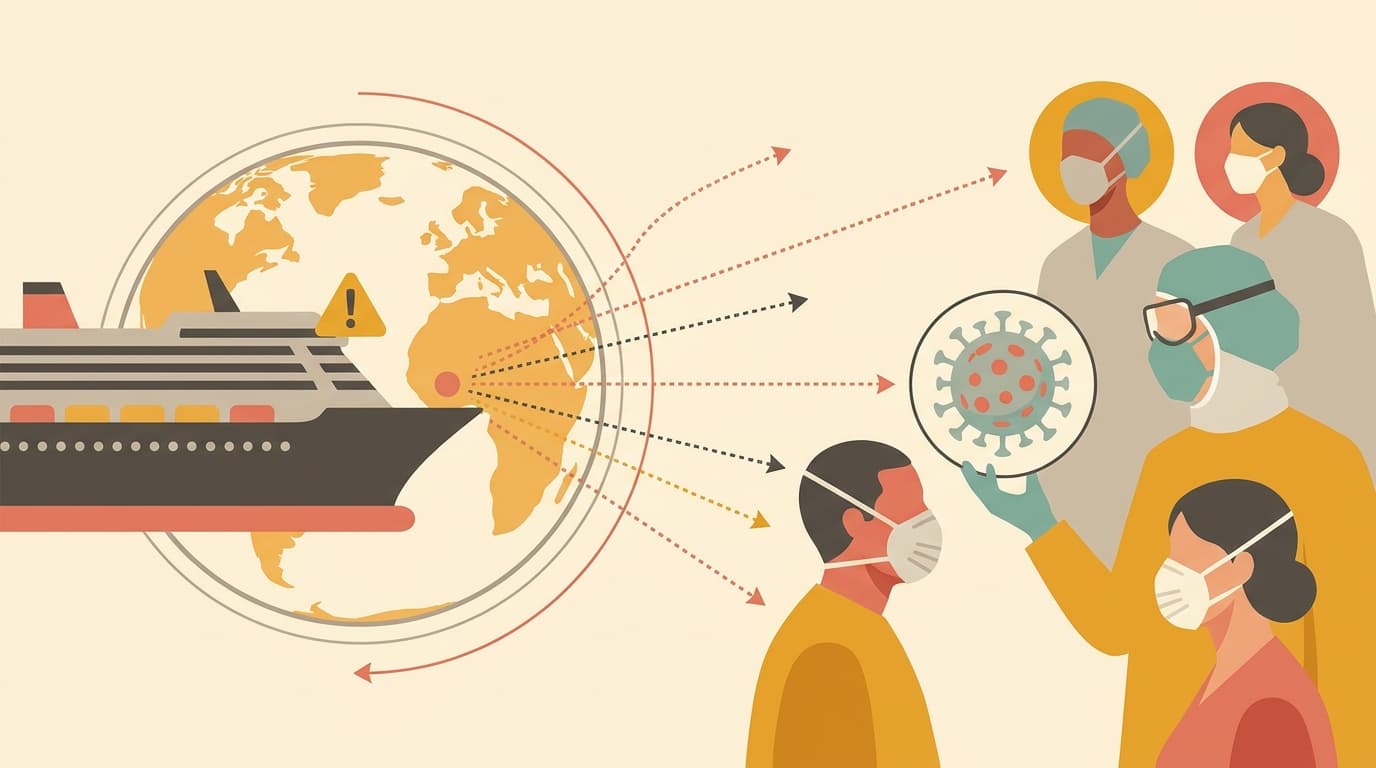
A French woman and an American man have tested positive for hantavirus after leaving a cruise ship. The MV Hondius had been stranded at sea for weeks following a deadly outbreak. The vessel finally arrived at Tenerife in Spain's Canary Islands on May 10. Nearly 150 passengers and crew were evacuated in a carefully managed international operation. Three passengers had already died since the ship departed Argentina on April 1.
The outbreak involves the Andes virus, a rare strain that can spread between humans. Most hantaviruses are transmitted only through contact with infected rodents or their droppings. However, the Andes strain is the sole exception, as it allows limited person-to-person transmission. This distinction has fuelled international concern about the confined environment of a cruise ship. The fatality rate of this particular strain can reach 40 to 50 percent.
Countries have been coordinating unprecedented repatriation efforts for their citizens. Spain worked with 22 nations and the WHO to organize the complex evacuation. Evacuated passengers face a recommended quarantine period of 42 days upon returning home. American passengers were flown to a medical facility in Nebraska for monitoring and assessment. A French passenger had developed symptoms during her repatriation flight, prompting immediate isolation protocols.
Despite the severity of the outbreak, health authorities are urging the public not to panic. WHO Director-General Tedros Adhanom Ghebreyesus assured residents that the risk to them remained low. He emphasized clearly that this situation is not comparable to the COVID-19 pandemic. Experts note that the virus requires prolonged, close contact to spread between people. Nevertheless, this incident has exposed significant gaps in our understanding of hantavirus transmission.