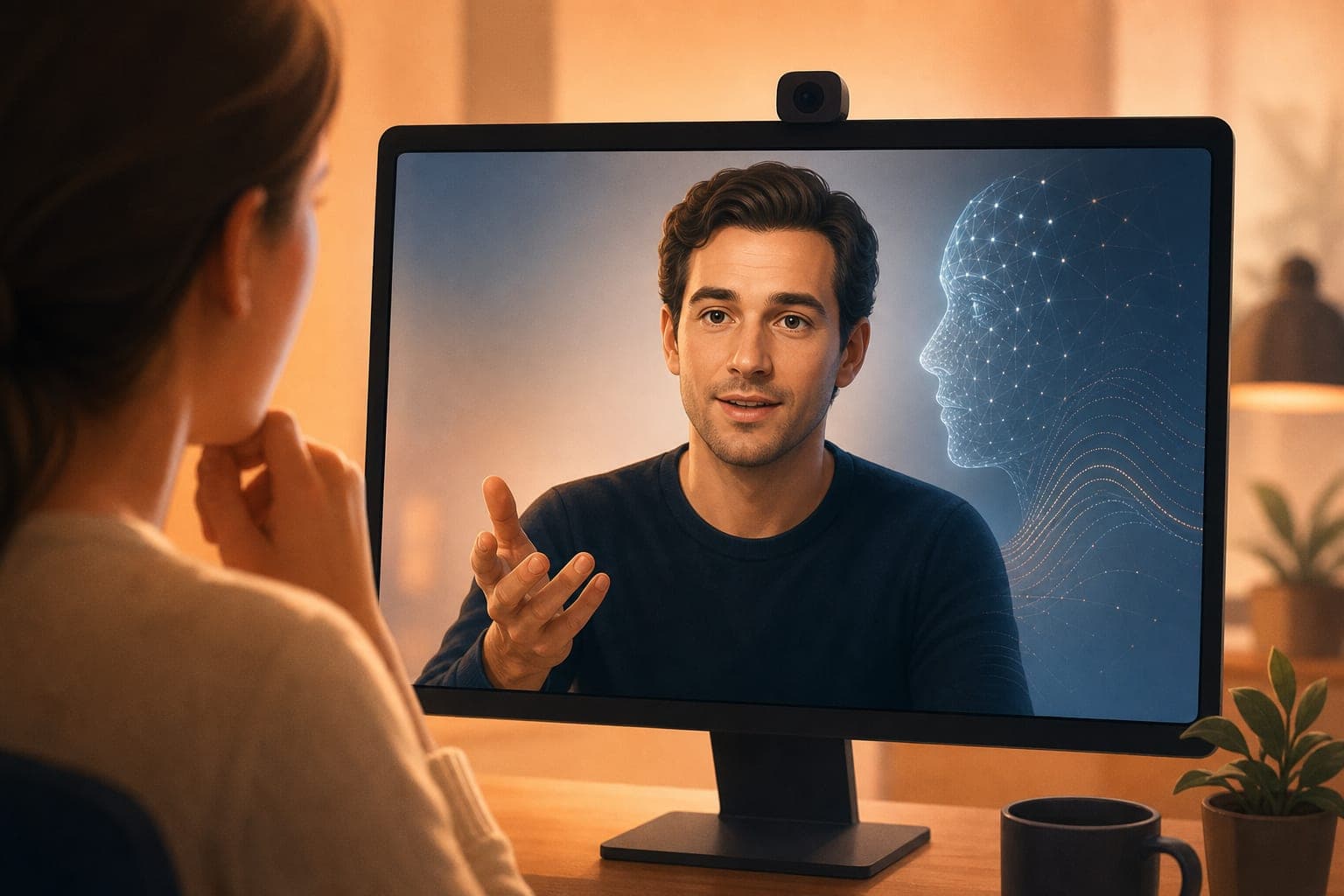
Seldom has an artificial intelligence system blurred the line between human and machine so convincingly. On October 1, 2026, Tavus, a San Francisco-based company, unveiled Griffin. The company describes it as the first Human Interaction Model ever built. Unlike conventional chatbots that rely solely on text, Griffin conducts face-to-face video conversations in real time.
What distinguishes Griffin from previous systems is its capacity to perceive and respond simultaneously. It sees, hears, speaks, and reacts continuously during a conversation. It can adapt its tone, timing, facial expressions, and gestures to match the flow of dialogue. Should someone interrupt or change the subject, Griffin adjusts dynamically rather than freezing or repeating itself.
The benchmark results have been striking. On NVIDIA's full-duplex video evaluation, Griffin scored 3.83 out of 5, remarkably close to the human reference of 3.92. In a blind study involving 54 participants, 48 percent believed they had spoken with a real person. Previous AI systems had achieved a pass rate of less than 3 percent on similar tests.
The implications of this technology extend well beyond novelty. For online education, a Griffin-powered tutor could read a student's confusion and respond accordingly. In customer service, such a system might handle inquiries with unprecedented warmth and attentiveness. However, the prospect of increasingly lifelike AI also raises legitimate ethical concerns about deception and impersonation.
Tavus has acknowledged these risks and is proceeding cautiously with its rollout. Currently, only a limited research preview called Griffin-Lite is accessible to select developers. The full model remains unreleased while the company refines its safety and disclosure mechanisms. Whether Griffin heralds a new era of seamless human-computer interaction remains to be seen.