
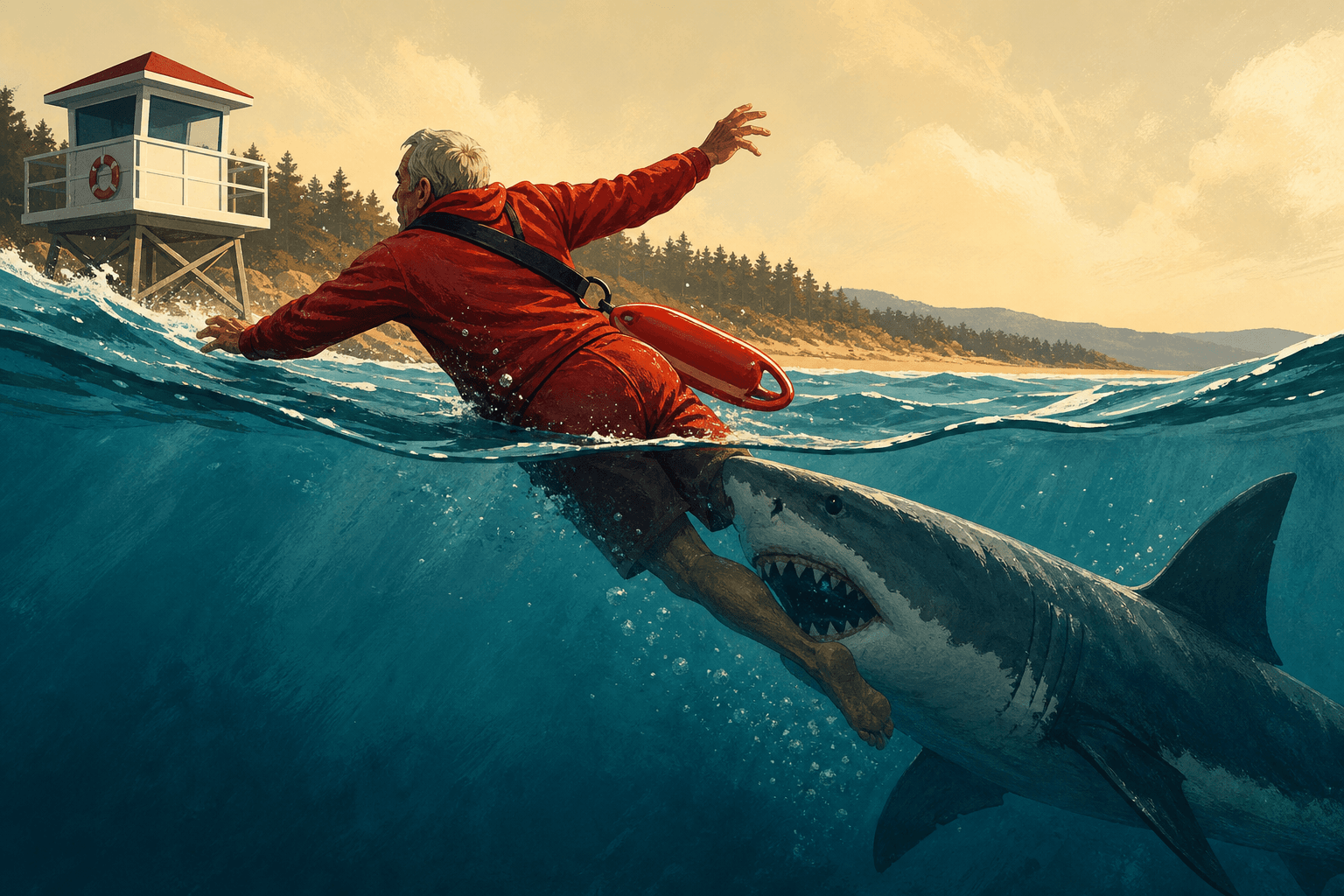
A veteran lifeguard had a frightening encounter with a great white shark last weekend. Greg Wilfert, who is 71 years old, was swimming on patrol at Scarborough Beach in Maine. A shark grabbed his rescue device and dragged him about five feet underwater. He managed to free himself from the strap and swim safely back to shore. Wilfert said the force that pulled him under was unlike anything he had ever felt.
After the incident, Wilfert immediately warned other swimmers to leave the water. The beach was shut down for about an hour while officials searched for the shark. Drones were sent into the sky, and jet skis patrolled the waves. Wilfert was not injured, and he returned to work the very next day. He urged beachgoers to be cautious but said people can still enjoy the ocean.
Officials report that shark sightings along Maine's coast have surged in recent weeks. At least a dozen sharks were spotted near popular beaches over the weekend alone. A marine resources officer said this volume is larger than anything he has witnessed. Many of the sharks appear to be juveniles, ranging from six to twelve feet long. Researchers believe the increase in activity is linked to prey near the shore.
Scientists say conservation efforts have helped the white shark population recover over time. Warming ocean waters may also be encouraging sharks to linger in northern areas longer. Communities are now adapting by training lifeguards and providing shark response kits. If beachgoers were better informed about shark behavior, they would feel safer in the water. Experts remind us that the ocean is a wilderness, and we should always be aware.