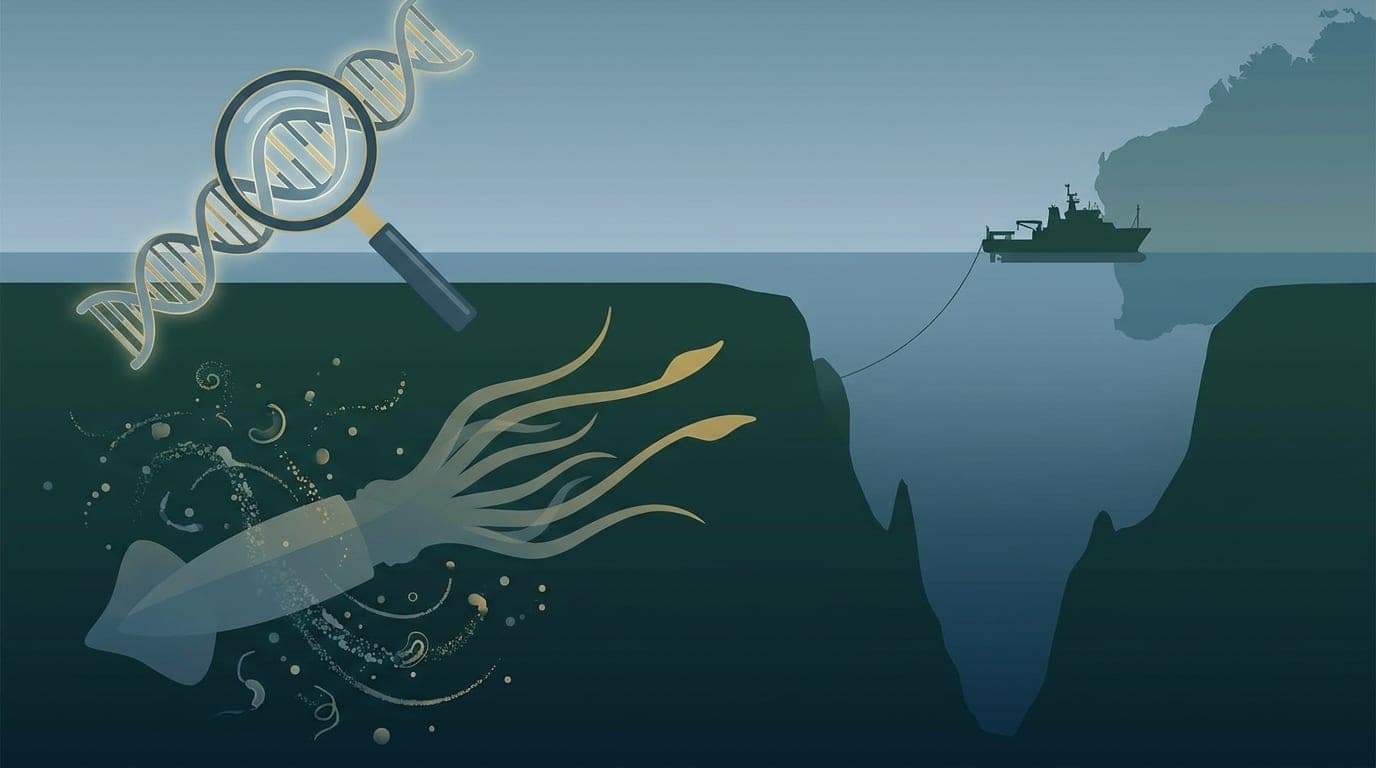
Evidence of a giant squid has been found in Western Australian waters for the first time in over 25 years. The discovery was made through environmental DNA sampling, not visual confirmation or physical capture. Scientists collected over 1,000 water samples from deep-sea canyons off the Ningaloo coast. Traces of giant squid DNA were detected across six separate samples. This represents the northernmost confirmed record of the species in the eastern Indian Ocean.
The giant squid, known scientifically as Architeuthis dux, remains one of the ocean's most elusive creatures. These remarkable animals can grow longer than a school bus and weigh up to 275 kilograms. They also possess the largest eyes of any creature on Earth. The study focused on the Cape Range and Cloates submarine canyons, approximately 1,200 kilometres north of Perth. These underwater habitats plunge to depths exceeding 4,500 metres.
Environmental DNA, or eDNA, is genetic material that animals shed invisibly into their surroundings. By extracting this genetic signature from water samples, scientists can identify species without observing them directly. This methodology has proved transformative for deep-sea exploration, where traditional nets and cameras often fail. Had researchers relied solely on conventional methods, this discovery might never have been made. The research was led by Curtin University and published in the journal Environmental DNA.
The broader biodiversity survey detected 226 species across 11 major animal groups in largely unexplored canyons. Dozens of species were recorded in Western Australian waters for the first time during this study. Notable discoveries included the sleeper shark, faceless cusk eel, and slender snaggletooth. Deep-diving mammals such as the Pygmy sperm whale and Cuvier's beaked whale were also detected. These findings demonstrate that eDNA technology could fundamentally reshape how scientists monitor marine biodiversity.