
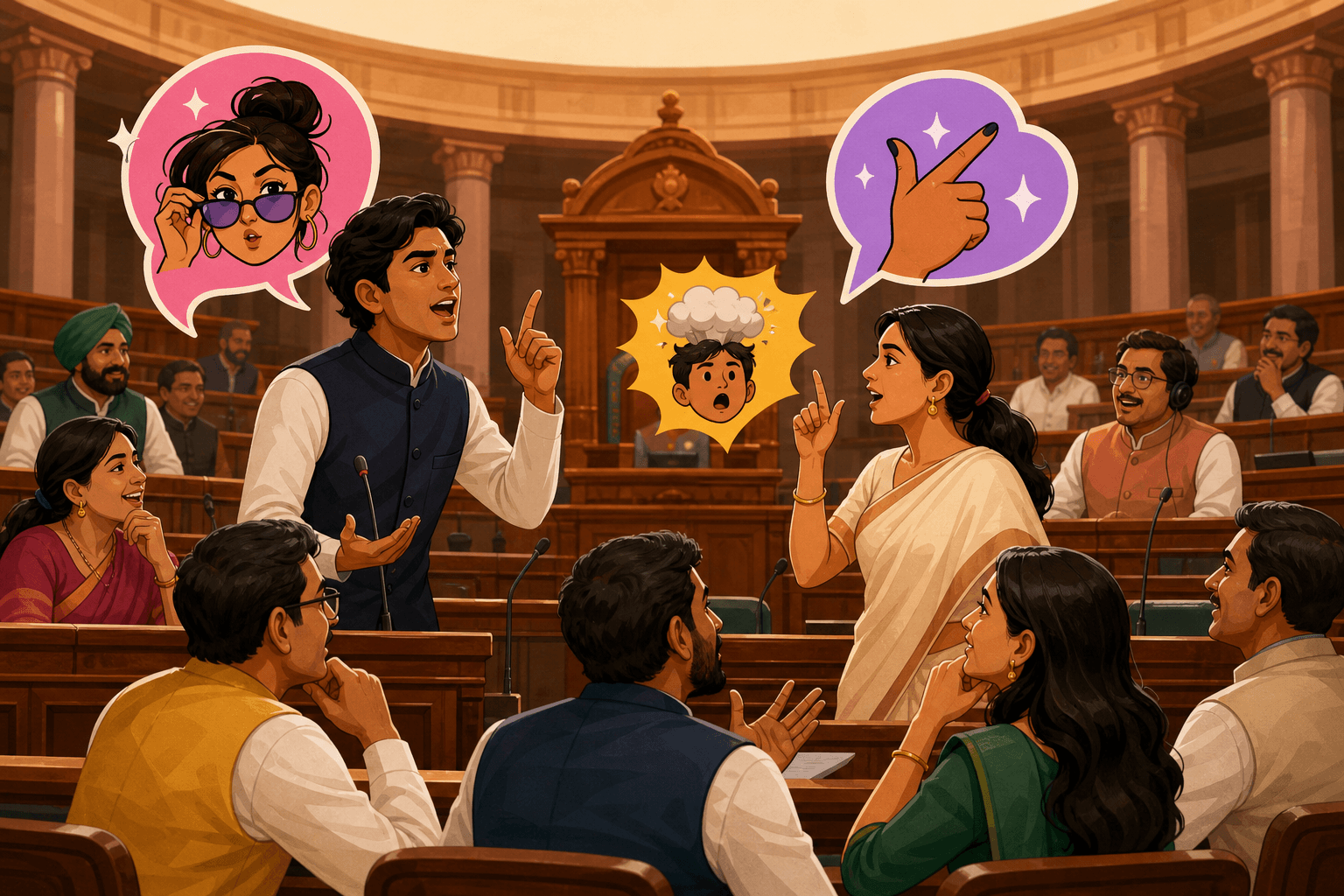
Something unexpected happened in India's Parliament this week. Members of Parliament used Gen Z internet slang during a serious debate. Words like 'delulu,' 'FOMO,' and 'clock it' filled the chamber. These terms are usually found on social media, not in government buildings.
The debate was about a new bill to prevent cheating in public exams. Young people across India had been protesting about unfair exam practices. Politicians from both sides adopted Gen Z vocabulary to connect with youth. One MP used 'delulu,' which is short for 'delusional,' to criticize opponents. Another said the government had 'clocked it,' meaning they noticed the problem quickly.
This trend reflects a broader shift in how language evolves today. Internet culture has created a wave of new expressions that spread rapidly worldwide. If older generations refused to learn these terms, they would struggle to understand young people. Some critics argue that informal language does not belong in formal settings. However, others believe it makes politics more accessible to younger citizens.
The incident sparked a lively discussion on social media about language and politics. Many young Indians felt pleased that their vocabulary was being recognized in Parliament. Whether people approve or not, Gen Z slang is clearly influencing mainstream culture. Language has always changed over time, and this is simply the latest chapter in that story.