
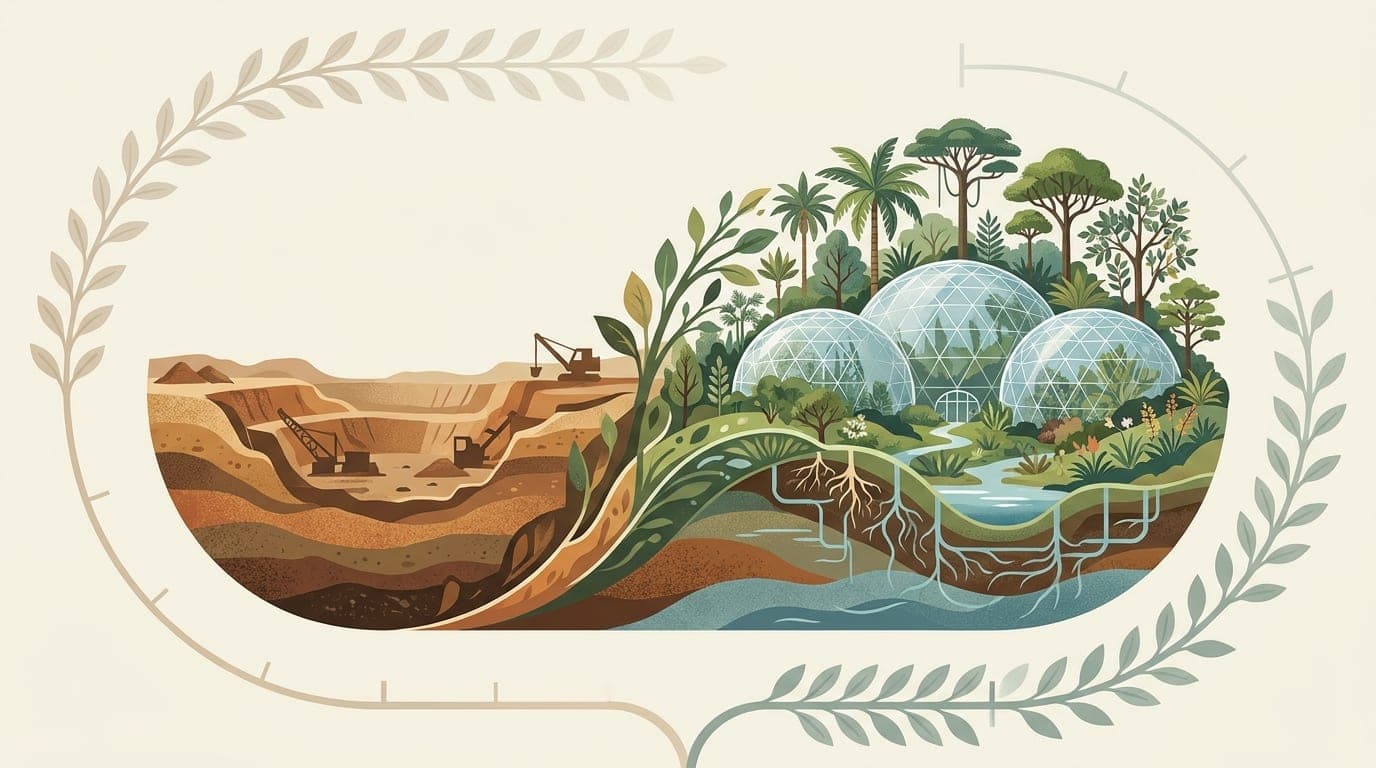
The Eden Project, which had been constructed inside an abandoned clay pit, is now celebrating its 25th anniversary. Located near St Austell in Cornwall, the site opened its doors in 2001. Since then, it has welcomed more than 25 million visitors from around the world. What was once a barren industrial landscape has been transformed into a thriving ecological hub. The project stands as a powerful symbol of regeneration and environmental possibility.
The site's most remarkable features are its Biomes, which are vast interconnected domes housing global ecosystems. The Rainforest Biome, measuring 100 meters wide and 55 meters high, is the largest. Temperatures inside can reach a sweltering 37°C to recreate authentic tropical conditions. Over 1,000 varieties of rainforest plants thrive within this enormous structure. Visitors can explore elevated walkways above the canopy and observe cascading waterfalls below.
The Mediterranean Biome showcases plant life from several regions with similar warm climates. It contains over 1,000 species, including ancient olive trees and fragrant herbs. Plants from California, South Africa, and Western Australia are also represented in this dome. Had the original designers not been so ambitious, this extraordinary diversity would never have existed.
Beyond its architectural innovation, the Eden Project serves a vital educational purpose for the public. Exhibits highlight how everyday products like coffee and cacao depend on fragile rainforest ecosystems. Visitors learn about the communities worldwide that cultivate these essential crops. If the project had not been established, millions of people would have missed this crucial knowledge. The Eden Project demonstrates that ecological restoration can succeed on a truly unprecedented scale.