Seldom has a geological discovery carried such profound environmental implications. Researchers at the University of Utah have located a deep freshwater reservoir beneath Farmington Bay. This first-of-its-kind breakthrough was led by Michael Zhdanov, a distinguished professor of geology and geophysics. The findings, published in the Nature-affiliated journal Scientific Reports, have generated considerable academic interest. Not only does this discovery advance geological knowledge, but it may also mitigate a growing ecological crisis.
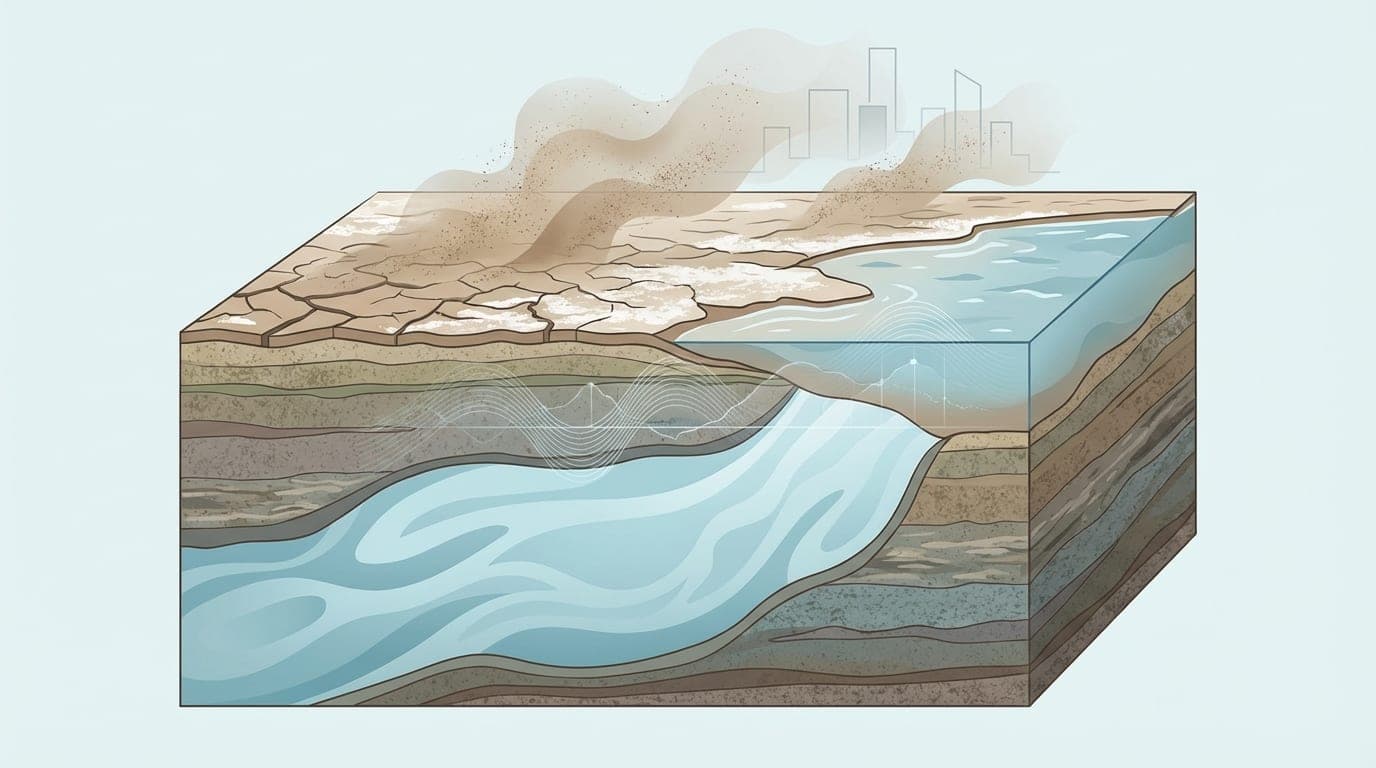
The reservoir saturates sediments beneath the lake's hypersaline surface to remarkable depths of approximately 10,000 to 13,000 feet. Researchers employed an airborne electromagnetic survey to gather their data. Electromagnetic equipment was dangled from a helicopter along ten east-west survey lines over Farmington Bay. This methodology successfully detected freshwater beneath the thin, conductive layer of surface salt water. Had conventional techniques been used, such deep freshwater deposits might have remained undetected.
What initially catalyzed the investigation was a striking biological anomaly on the dried lakebed. Circular mounds of phragmites, a type of reed, were observed growing in the exposed terrain. These mounds measure 50 to 100 meters in diameter and feature reed thickets reaching 15 feet in height. Zhdanov noted that these plants require substantial freshwater, raising the question of its origin. He concluded that the water appeared to be coming from underground sources.
The environmental context surrounding this discovery is particularly urgent. Declining water levels have exposed approximately 800 square miles of dry lakebed, known as playa. This vast exposed area generates toxic, metal-laden dust that blows directly into Utah's most densely populated regions. Were this pollution to remain unaddressed, public health consequences could prove severe. The research was accordingly funded by the Utah Department of Natural Resources.
Zhdanov emphasized the practical significance of the survey's precise measurements for future water management strategies. By determining the reservoir's depth, spatial extent, and porous space, scientists can now calculate its potential freshwater volume. This quantitative understanding may enable authorities to devise informed strategies for environmental remediation. Should further research confirm the reservoir's accessibility, it could fundamentally alter how Utah addresses its dust pollution crisis. The implications extend well beyond regional geology into the realm of public health policy.