
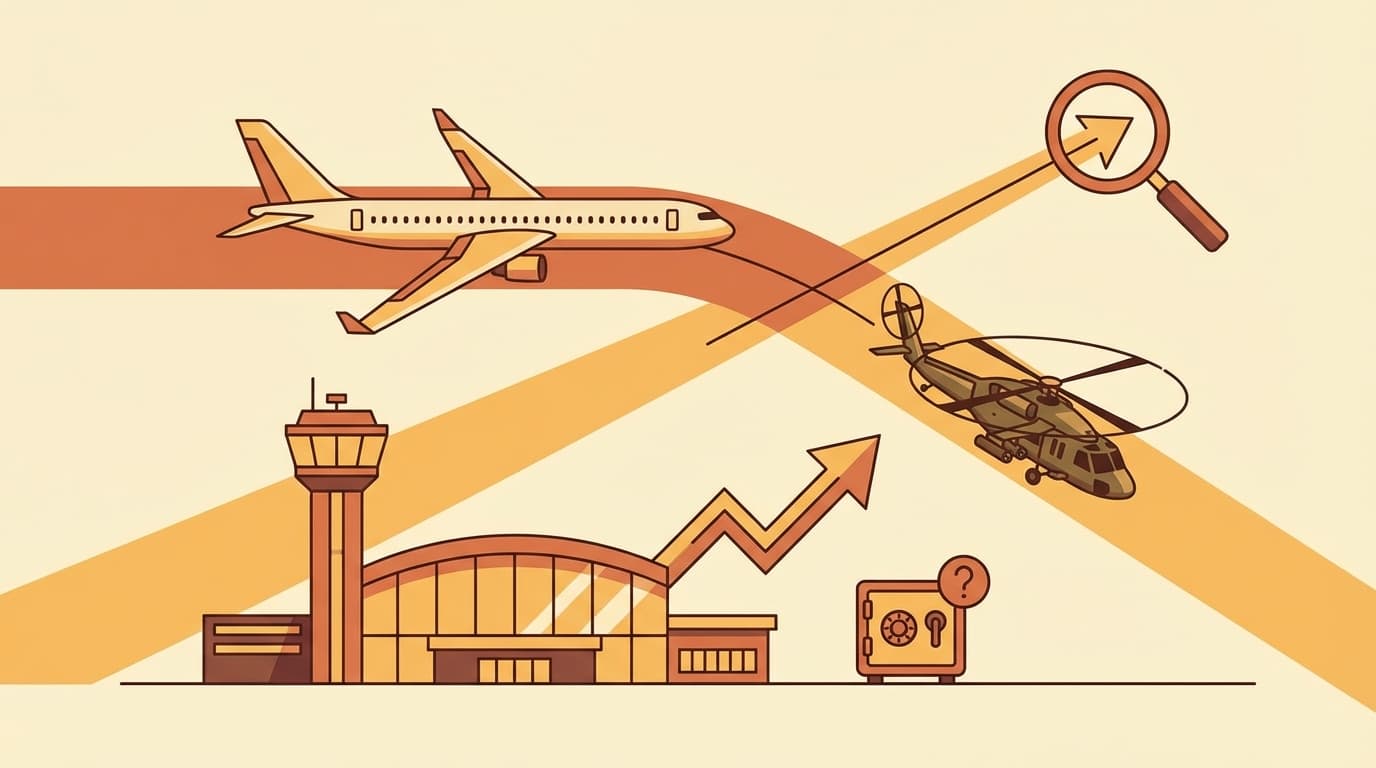
The Federal Aviation Administration is investigating a dangerous close call in California. On Tuesday evening, United Airlines Flight 589 was approaching John Wayne Airport in Santa Ana. A California National Guard Black Hawk helicopter crossed directly in front of the passenger jet. The Boeing 737, which had departed from San Francisco, was carrying 168 people on board. A collision avoidance alarm immediately sounded in the cockpit, warning the pilots of the threat.
According to flight tracking data, the two aircraft were separated by only 525 feet vertically. They were just 1,422 feet apart laterally at their closest point. Air traffic controllers had advised the pilots to watch for a military helicopter nearby. The pilots responded by leveling the aircraft until they had safely passed the helicopter. An air traffic controller later acknowledged the severity of the situation on the radio.
This incident is particularly alarming because of what happened in January 2025. A Black Hawk helicopter on a training mission collided with an American Airlines jet near Washington, D.C. Sixty-seven people were killed in the worst U.S. aviation disaster in nearly two decades. Investigators had concluded that systemic failures within the FAA caused that tragedy. The crash was determined to have been entirely preventable.
In response to that disaster, the FAA recently published a new safety order. The rule requires air traffic controllers to use radar to actively track helicopters near airports. Previously, helicopter pilots had been allowed to rely on visual separation with other aircraft. The new requirement applies to more than 150 of the nation's busiest airports. The FAA is now examining whether this new policy was properly applied during Tuesday's incident.