
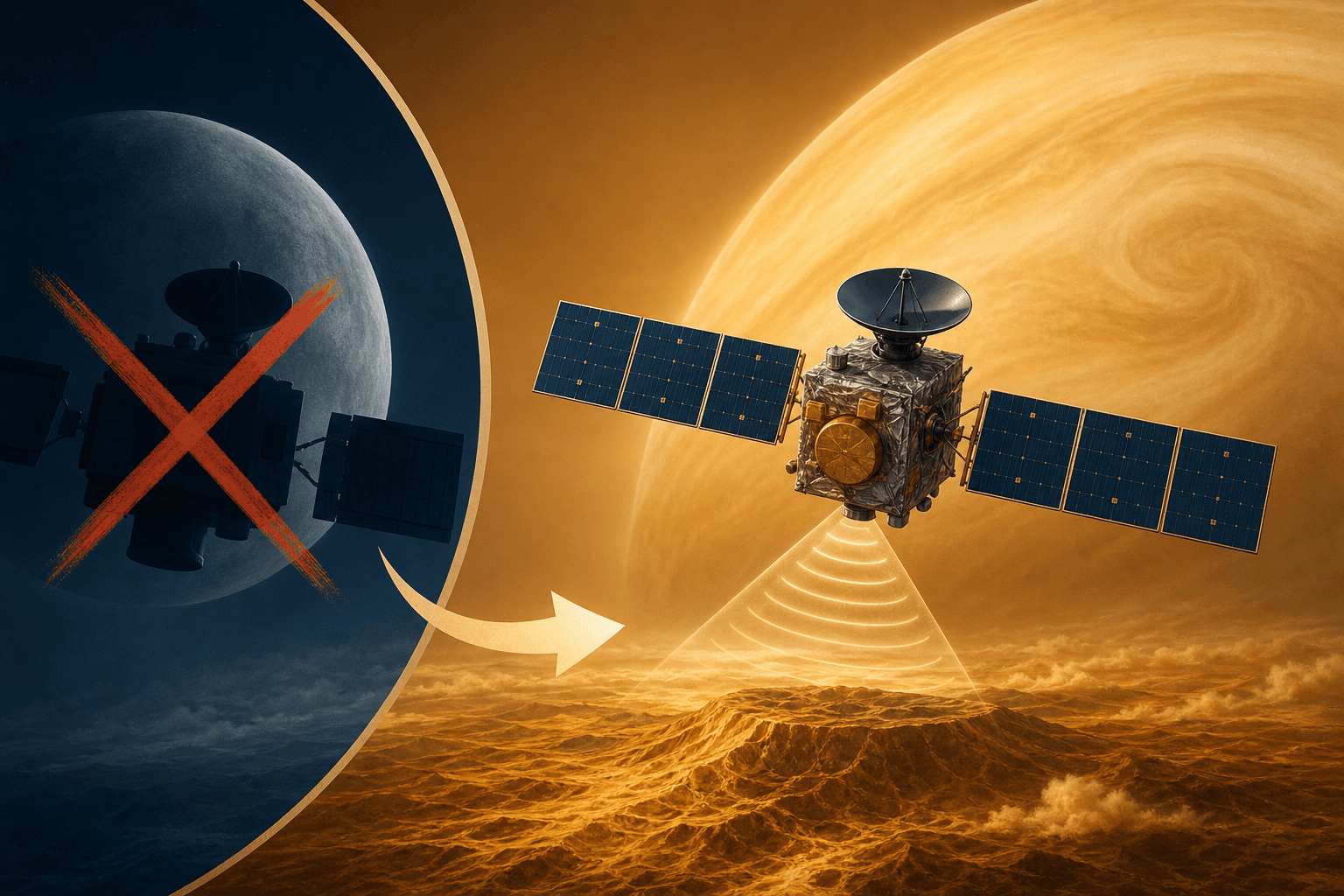
Europe has decided to explore Venus on its own. The European Space Agency had planned to work with NASA on a mission called EnVision. NASA was supposed to provide a special radar instrument for the spacecraft. However, deep budget cuts in the United States changed everything. Now, ESA is building a European replacement and moving ahead independently.
The radar instrument is crucial for studying Venus. The planet is covered by thick clouds of sulfuric acid. Regular cameras cannot see through this dense atmosphere from space. Radar is the only effective way to map the rocky surface below. Without it, scientists would be almost blind to what lies beneath.
NASA and ESA signed an agreement in 2024 for this partnership. NASA promised to supply the radar and communication support through its Deep Space Network. In return, ESA would build the spacecraft and launch it on an Ariane 6 rocket. Budget proposals from the White House severely cut NASA's science funding. Although Congress restored some money, it was not enough to save the partnership.
ESA has already begun developing its own radar with teams in the UK and Italy. The launch has been pushed back from 2031 to 2032 because of the change. Some experts believe Europe could also seek help from other countries, including China. This situation highlights how uncertain international space cooperation has become. Despite the setback, EnVision remains one of the most ambitious Venus missions ever planned.