
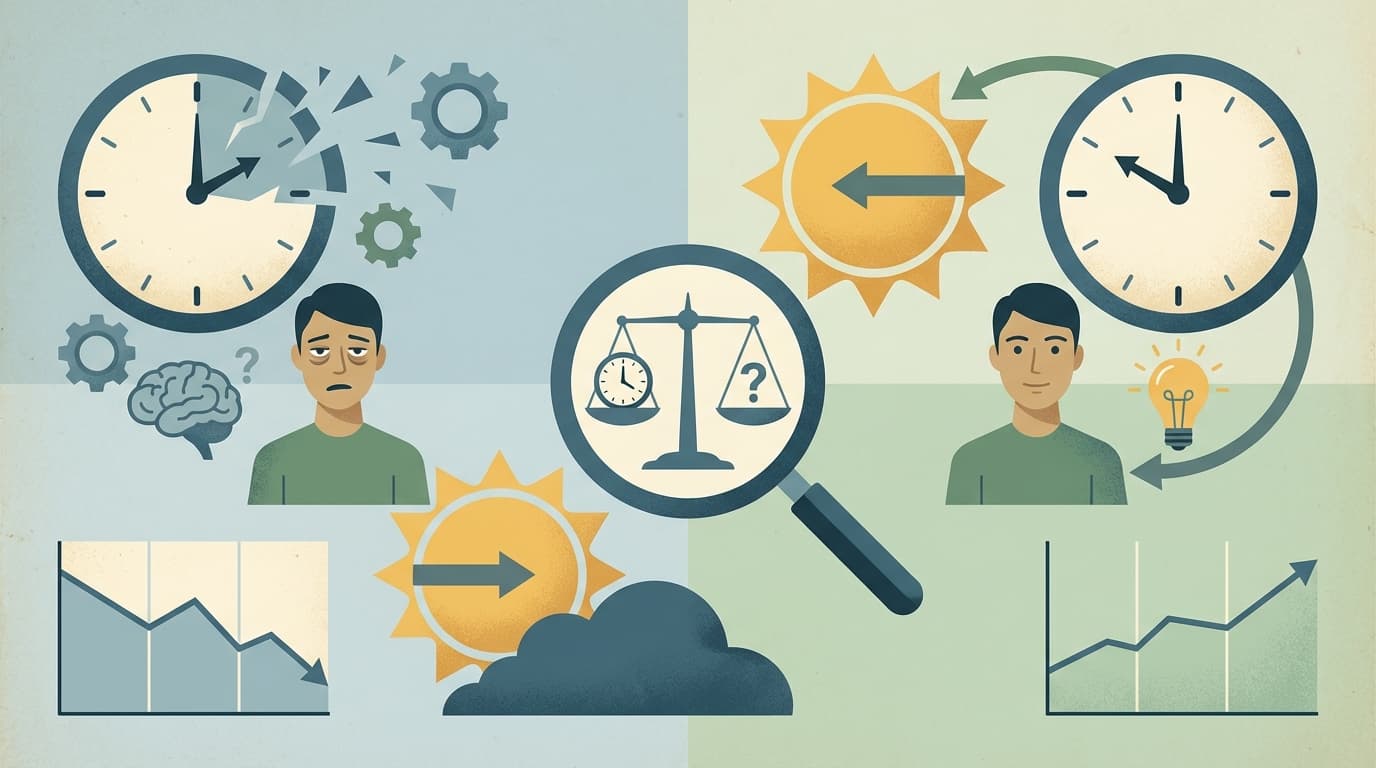
Daylight Saving Time commenced across most of the United States on Sunday, March 8, 2026. At 2:00 a.m., clocks were shifted forward by one hour. This adjustment, commonly known as "spring forward," effectively moved an hour of daylight from morning to evening. Consequently, millions of Americans had been deprived of a full hour of sleep. The change will remain in effect for 238 days until November 1.
The practical impact of this shift is clearly illustrated by data from the National Weather Service. In Boston, the sun had risen at 6:09 a.m. the day before the change occurred. After clocks advanced, sunrise shifted to 7:08 a.m. and sunset moved to 6:42 p.m. Although mornings became darker, evenings now offer substantially more daylight. Most modern smartphones and digital devices update their clocks automatically during this transition.
The origins of Daylight Saving Time can be traced back to 1918. It was initially adopted to conserve fuel during World War I. Had the 1970s experiment with year-round DST succeeded, the biannual change might have been eliminated permanently. However, that trial, which began in January 1974, proved highly unpopular and was abandoned within months. The current schedule, starting on the second Sunday of March, has been observed since 2007.
Despite its original purpose, research suggests that DST yields marginal energy savings. A 2007 study found that the time shift reduced electricity consumption by merely 0.03 percent. Furthermore, the disruption has been associated with negative health consequences. Hawaii and Arizona do not observe DST, nor do several U.S. territories. The ongoing debate raises a fundamental question about whether this policy remains justified.