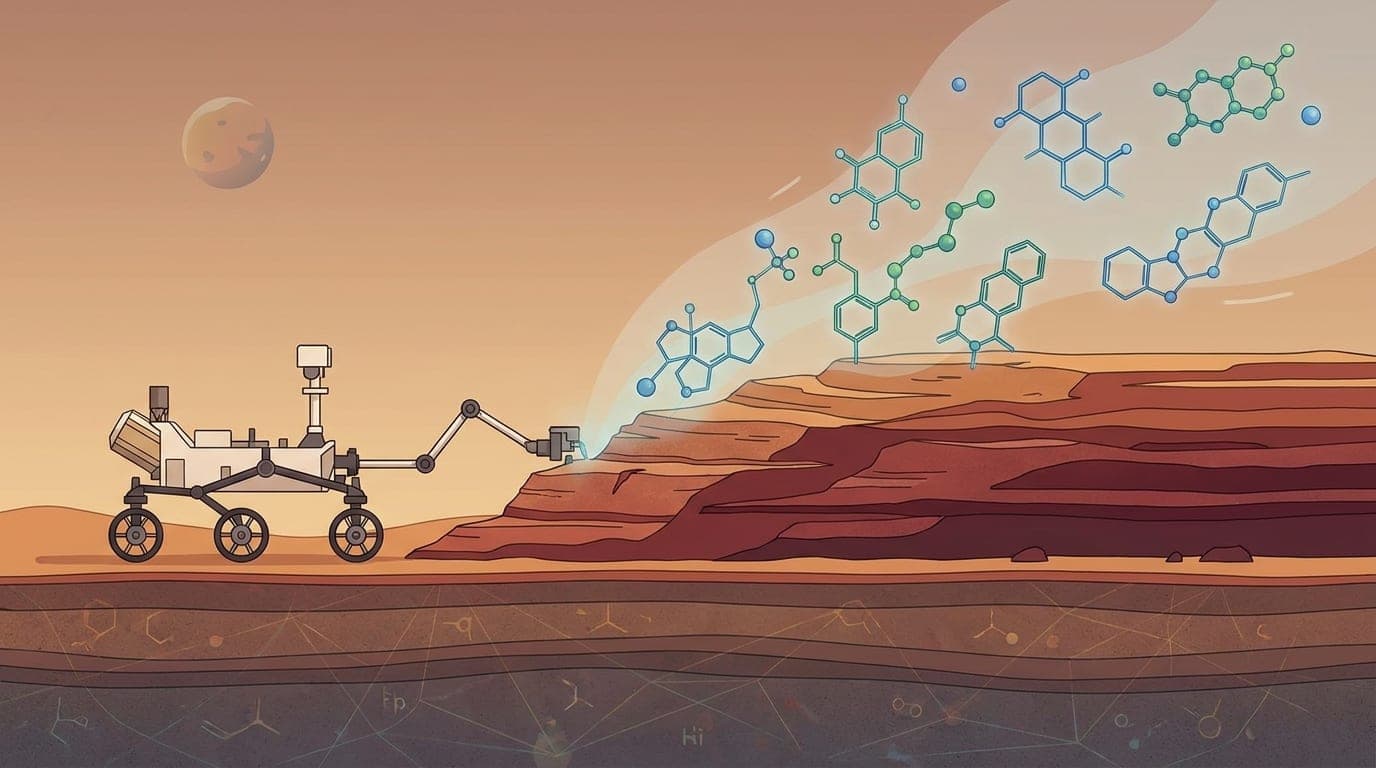
NASA's Curiosity rover has made a groundbreaking discovery on the surface of Mars. A rock sample that had been drilled and collected in 2020 has yielded remarkable results. After years of careful laboratory analysis, scientists confirmed the most diverse collection of organic molecules ever found on Mars. Of the 21 carbon-containing molecules identified, seven were detected for the first time on the Red Planet.
The experiment was conducted in the Glen Torridon region of Gale Crater. This area is rich in clay minerals, which indicate that water once existed there. Scientists used the Sample Analysis at Mars instrument, known as SAM, located inside the rover. A chemical called TMAH was employed to break apart larger molecules for detailed analysis. Among the compounds discovered were benzothiophene and a nitrogen-bearing molecule resembling DNA precursors.
These findings are considered significant because they demonstrate that complex organic matter can be preserved on Mars. The molecules had survived approximately 3.5 billion years of radiation exposure and geological change. Had these compounds not been protected by clay-rich sediments, they would likely have been destroyed long ago. Scientists believe the clay minerals were particularly effective at preserving organic chemicals over deep geological time.
However, researchers acknowledge that the experiment cannot determine whether the molecules originated from biological or geological processes. Definitively identifying signs of past life would require returning rock samples to Earth. Future missions, including the European Space Agency's Rosalind Franklin rover, may provide further evidence. This discovery nonetheless strengthens the prospect that ancient Mars once offered conditions favourable for life.