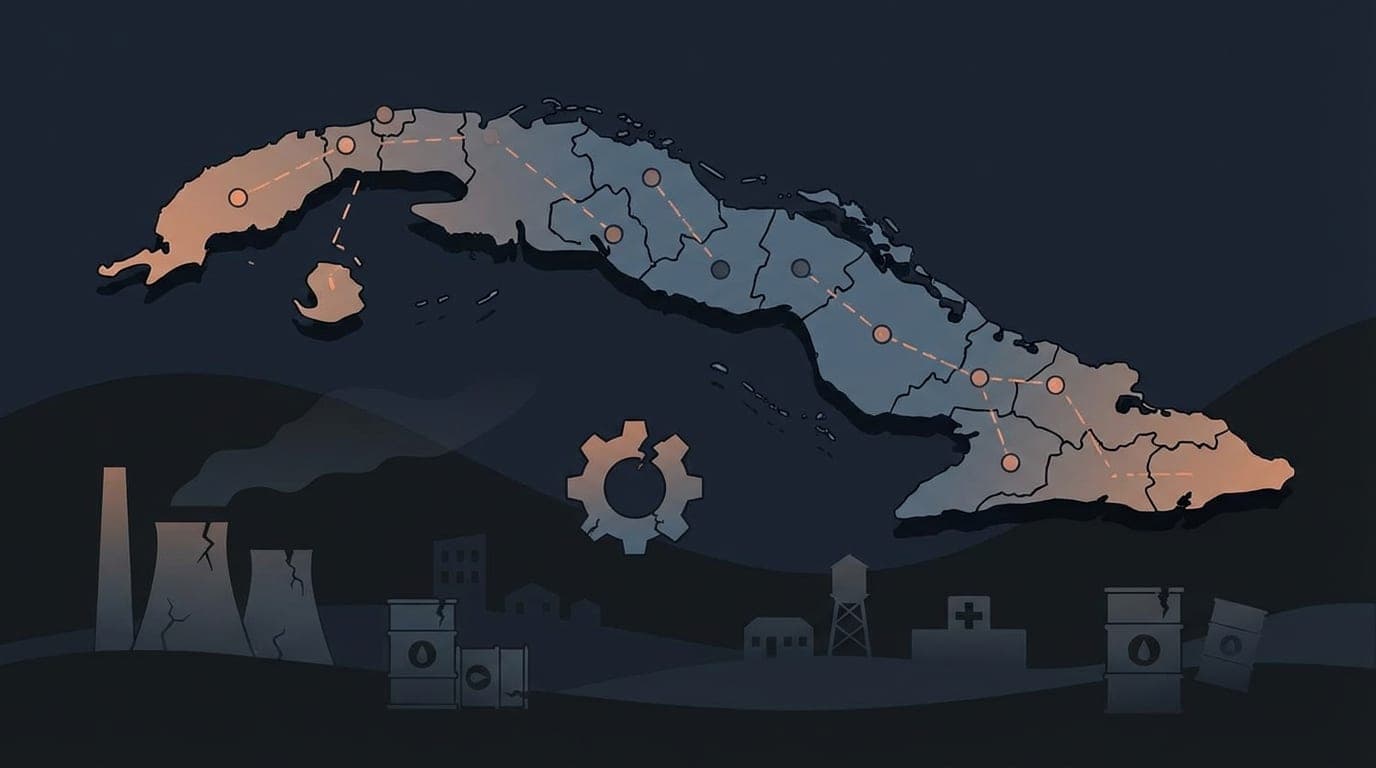
Cuba has been plunged into darkness after its national electrical grid suffered a catastrophic collapse. More than ten million residents have been left without power. The grid failure, which had occurred multiple times in March alone, represents the worst energy crisis in decades. Authorities confirmed a complete disconnection of the country's electrical system. This unprecedented situation has affected the entire island, including the capital, Havana.
The crisis has been attributed to a combination of deteriorating infrastructure and chronic fuel shortages. Cuba's thermoelectric power plants were constructed decades ago and have far exceeded their operational lifespan. The island produces barely forty percent of the fuel it needs to sustain its economy. Furthermore, no oil shipments had been received from foreign suppliers for three months. Consequently, hospitals, water systems, and communications networks have all been severely disrupted.
Experts have identified several underlying causes of this recurring emergency. Professor William LeoGrande of American University has stated that the grid's infrastructure is far beyond its useful life. Had the government invested in maintenance and renewable energy sources earlier, this collapse might have been avoided. Economic sanctions have also complicated the importation of spare parts and essential fuel supplies. These compounding factors have created what analysts describe as a perfect storm of collapse.
The humanitarian consequences of the blackouts have been profound and far-reaching. Daily outages have disrupted work schedules, destroyed refrigerated food, and cut off water supplies for thousands. Residents have expressed exhaustion from the relentless power failures that dominate their daily existence. Protests have erupted in several cities as public frustration with deteriorating living conditions intensifies. Unless substantial infrastructure upgrades are undertaken, this devastating cycle is expected to continue.