
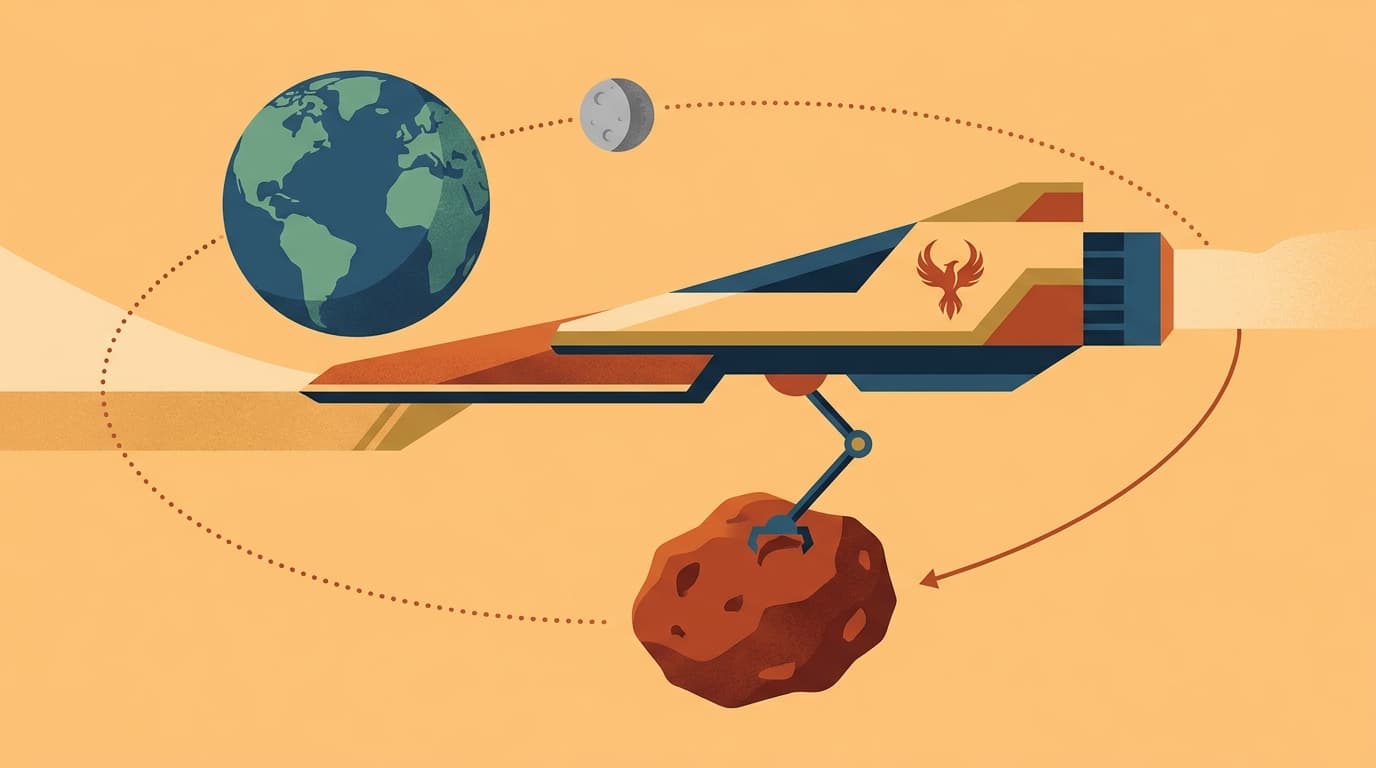
China has reached an exciting milestone in space exploration. Its Tianwen-2 spacecraft has arrived at a small asteroid called Kamo'oalewa. This space rock is known as a quasi-moon because it follows Earth around the Sun. It is not a true moon, but it behaves like a companion. The probe launched in May 2025 and traveled for about thirteen months.
Kamo'oalewa is estimated to be between 40 and 100 meters wide. That makes it the smallest asteroid ever visited by a spacecraft. The probe will attempt to collect samples from its surface using two methods. One is a touch-and-go approach, and the other uses drills to anchor onto the rock. If successful, the samples would be returned to Earth in late 2027.
What makes this mission extraordinary is the asteroid's mysterious origin. Some scientists believe Kamo'oalewa is a fragment of the Moon. Studies have shown that its surface reflects light similarly to lunar rock. It may have been blasted into space by an ancient impact millions of years ago. Analyzing the samples could finally confirm whether this theory is correct.
After dropping off the samples, Tianwen-2 will continue its ambitious journey. The spacecraft will travel deeper into the solar system to study a distant comet. The entire mission is expected to last about ten years. If everything goes as planned, it would be a remarkable achievement for China's space program. This mission demonstrates how nations are increasingly exploring small objects in space.