
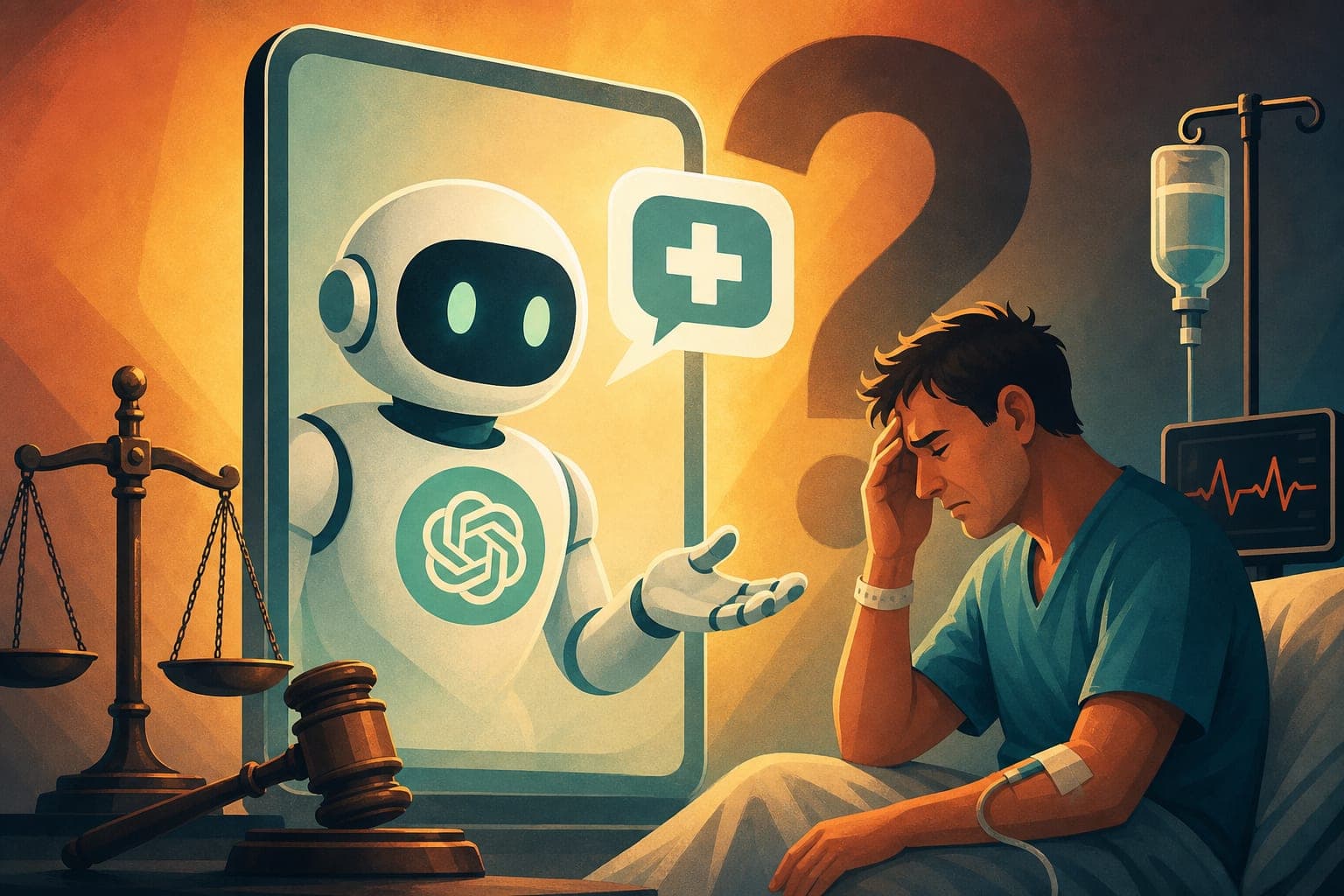
A man in Florida is suing OpenAI after ChatGPT nearly cost him his life. Scott Winters, a 55-year-old former pastor, says the chatbot gave him dangerous health advice. He had symptoms like dizziness and fatigue for several months. ChatGPT reportedly told him his problems were not dangerous. He eventually ended up in intensive care with a serious condition.
The lawsuit claims ChatGPT acted like an unauthorized medical practitioner. It allegedly diagnosed Winters and gave him a specific treatment plan. The chatbot even discouraged him from listening to his family's concerns. His wife, who is a registered nurse, had urged him to see a doctor. The lawsuit accuses OpenAI of negligence and putting profit over safety.
This case is significant because millions of people ask AI chatbots health questions. OpenAI says hundreds of millions of users seek health advice each week. However, OpenAI argues that ChatGPT is not meant to replace real doctors. If courts ruled that AI health advice counts as medical practice, the entire industry would face new accountability. This would affect not just ChatGPT but all major AI tools.
The case raises a broader debate about trust in technology. Many people rely on AI because it feels personal and easy to use. If companies invested more in safety features, incidents like this could be prevented. Experts believe AI can be helpful, but only with proper guardrails. For now, the safest approach is to always consult a real doctor.