Seldom has a geopolitical conflict so far from British shores posed such a tangible threat to domestic food security. The ongoing Iran war, now in its sixth week, has precipitated a cascade of supply chain disruptions with profound implications for the United Kingdom. Senior officials have drafted a secret government analysis modelling a worst-case scenario for June 2026. At the heart of their concerns lies a critical shortage of carbon dioxide, an industrial gas indispensable to modern food production.
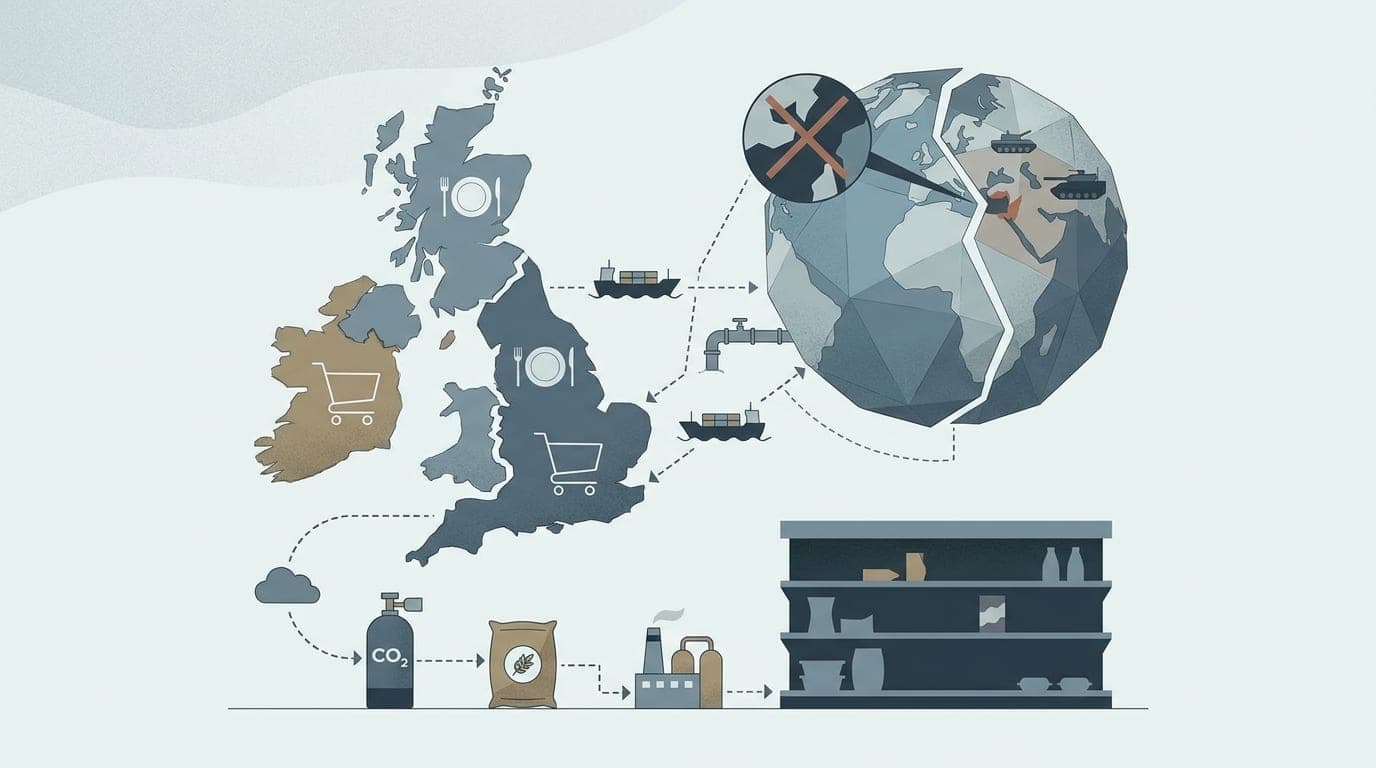
Under the most adverse projections, CO2 supplies could plummet to just eighteen per cent of current levels. This would constitute a devastating blow to the farming and hospitality sectors alike. Carbon dioxide is essential for extending the shelf life of packaged meat, salads, and baked goods. It is also used in the slaughter of nearly all pigs and over two-thirds of chickens processed in Britain.
The underlying mechanism driving this vulnerability is the closure of the Strait of Hormuz, a vital maritime chokepoint. Approximately one-third of globally traded fertiliser passes through this narrow waterway. Its blockade has simultaneously disrupted energy markets and ammonia production across Europe, both of which are key sources of CO2. Consequently, even industries with no direct sourcing ties to the Middle East find themselves exposed.
The ramifications extend well beyond carbon dioxide. The Food and Drink Federation has revised its UK food inflation forecast to nine per cent by year's end. Red diesel prices for farmers have surged by approximately sixty per cent, while fertiliser costs continue to escalate. The UK imports around sixty per cent of its nitrogen fertiliser, rendering it acutely susceptible to global market volatility.
In response, the government has taken decisive action to mitigate the crisis. Officials temporarily restarted the Ensus bioethanol plant in Teesside to bolster CO2 supplies. Government lawyers have also been instructed to prepare for potential use of the Civil Contingencies Act. While widespread food shortages are not yet anticipated, reduced consumer choice on supermarket shelves appears increasingly probable. This crisis underscores the precarious nature of Britain's food self-sufficiency, which currently stands at approximately sixty-two per cent.