The Taftan volcano in southeastern Iran has been dormant for about 700,000 years. No eruption has ever been recorded in human history at this site. However, scientists have now detected signs that the volcano is waking up. The ground near its summit has risen by about 3.5 inches over ten months. This discovery has raised serious concerns among researchers studying the region.
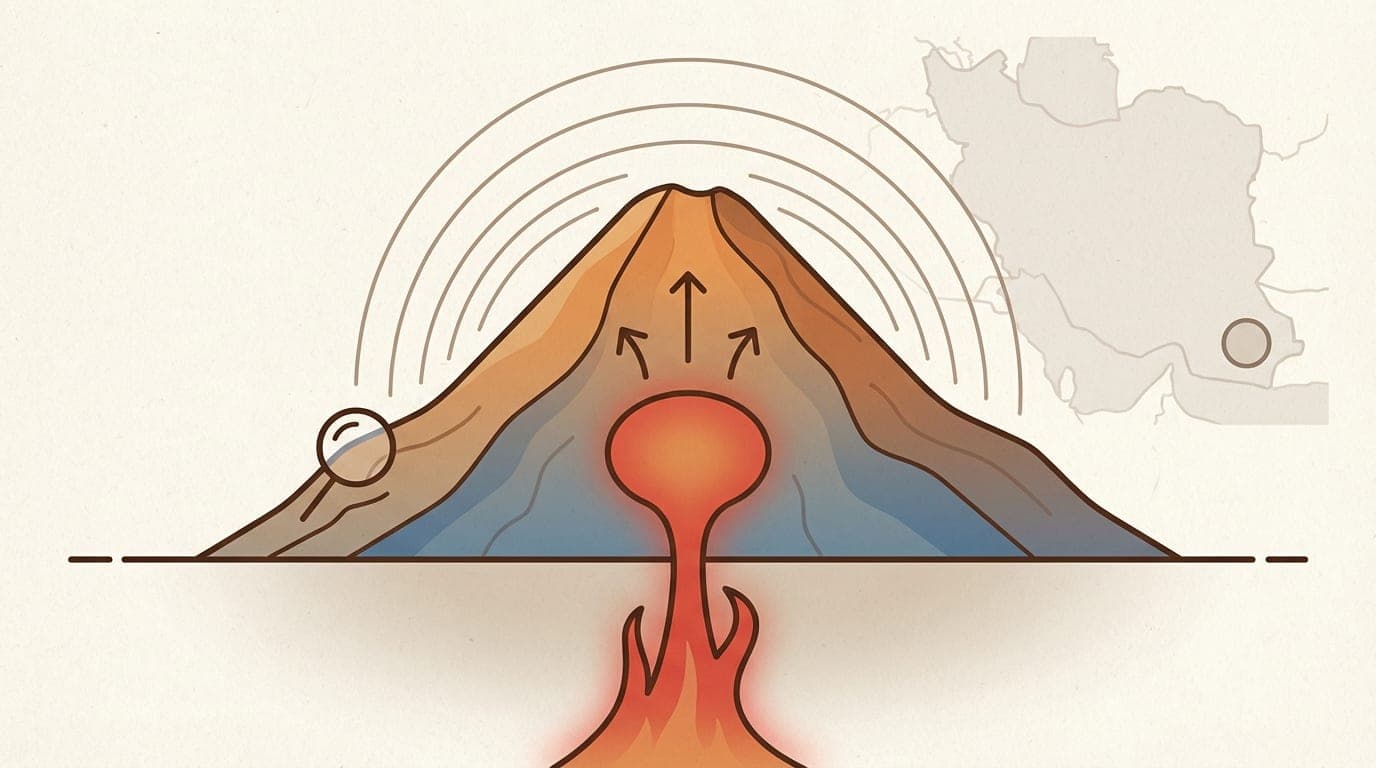
Taftan is a stratovolcano that stands 12,927 feet above sea level. A stratovolcano is a steep mountain built from layers of lava and ash. The pressure causing the ground to rise comes from a shallow depth. It is located only 1,600 to 2,070 feet below the surface. The actual magma reservoir sits much deeper, over two miles underground.
Scientists ruled out earthquakes and heavy rain as possible causes of the uplift. Instead, they believe hot gases are collecting inside a hydrothermal system underground. As gas pressure grows in tight rocks and fractures, the ground lifts upward. The ground has not fallen back, which means the pressure has not been released. The city of Khash lies only 31 miles away from the volcano.
The main threats are not lava flows but phreatic blasts and gas bursts. Phreatic blasts are steam-driven explosions that happen when hot fluids turn to vapor. These events can irritate eyes and lungs and damage nearby crops. Pablo J. González, the senior author of the study, stated an important message. He said this study was a wake-up call for authorities to provide resources.