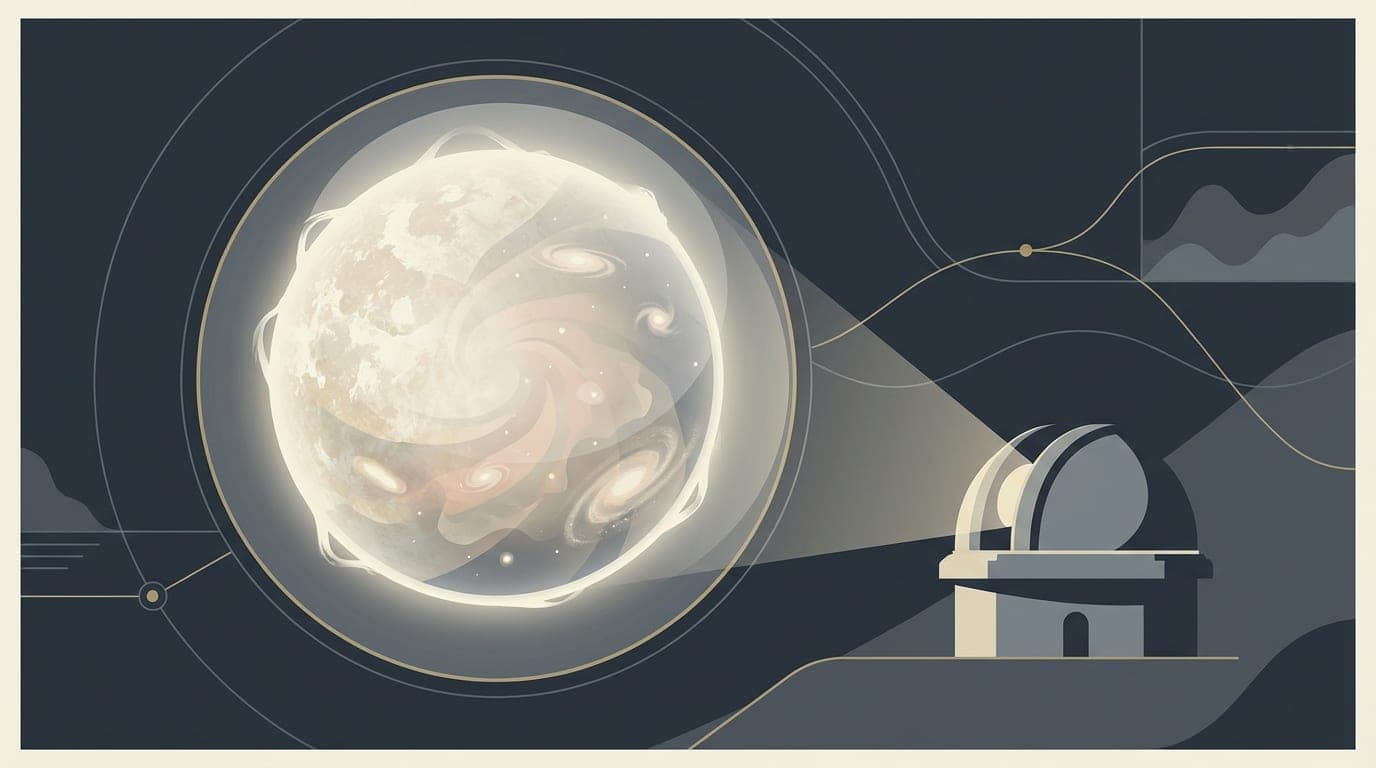
A team of astronomers has identified the most pristine star ever observed in the universe. The star, named SDSS J0715-7334, is located about 80,000 light-years from Earth. It was formed only a few billion years after the Big Bang. This ancient object is considered a relic from the earliest period of cosmic history. Its discovery has been published in the prestigious journal Nature Astronomy.
The star's significance lies in its exceptionally low content of heavy elements. In astronomy, elements heavier than hydrogen and helium are referred to as metals. This star contains less than 0.005 percent of the metal content found in our Sun. It is twice as metal-poor as the previous record holder for stellar purity. Consequently, it represents the most chemically primitive object ever identified.
The research was led by Alexander Ji from the University of Chicago. His team, which notably included undergraduate students, used the Magellan telescopes in Chile. Had they not analysed data from the Sloan Digital Sky Survey, this star might never have been found. The team also determined that the star had originally formed elsewhere. It was gradually pulled into the Milky Way over billions of years.
This discovery has profound implications for our understanding of early star formation. The first stars were composed entirely of hydrogen and helium gas. When those massive stars died, they produced heavier elements through powerful explosions. Scientists believe cosmic dust, rather than heavy elements alone, helped later stars form. Such findings could reshape theoretical models of how galaxies initially evolved.