A team of astronomers has made a remarkable discovery that could reshape our understanding of the early universe. Undergraduate students at the University of Chicago identified the most chemically pristine star ever found. The star, named SDSS J0715-7334, is located approximately 80,000 light-years from Earth. It consists almost entirely of hydrogen and helium, with extraordinarily few heavy elements. This composition indicates that it formed during the earliest period of cosmic history.
The star possesses only 0.005 percent of the heavy elements found in our Sun. In astronomy, elements heavier than helium are referred to as metals. A star's metallicity reveals how old it is, because heavy elements accumulated gradually over time. SDSS J0715-7334 has nearly half the metallicity of the previous record holder. Consequently, scientists believe it belongs to one of the first generations of stars ever formed.
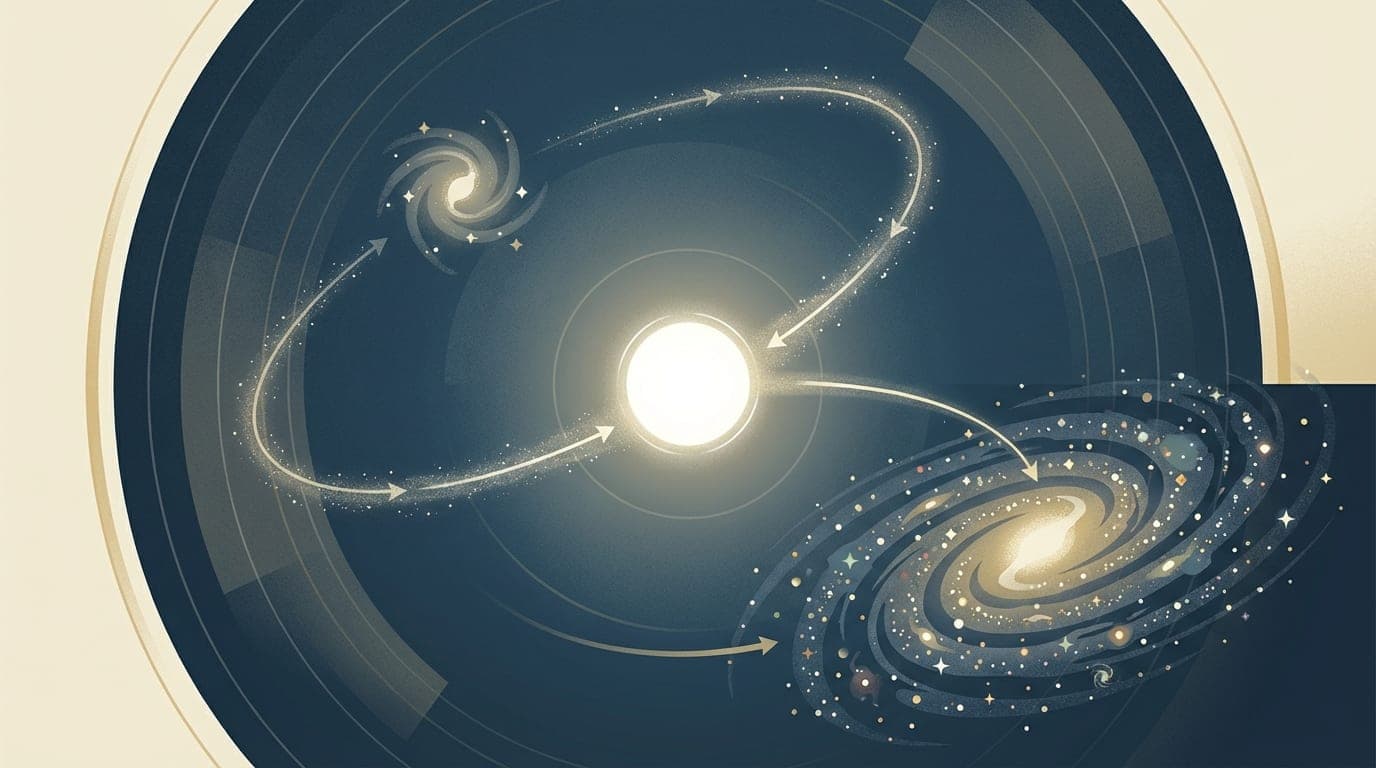
Analysis of the star's orbit revealed a surprising origin. It did not form in the Milky Way but in the Large Magellanic Cloud instead. This dwarf galaxy orbits our own galaxy and is its largest companion. The star migrated into the Milky Way billions of years ago, earning it the nickname 'Ancient Immigrant.' Had it not survived long enough as a red giant, this discovery would never have been possible.
The discovery was published in the journal Nature Astronomy in April 2026. It provides unprecedented insight into conditions that existed shortly after the Big Bang. Furthermore, the finding suggests that smaller galaxies may contain more such pristine ancient stars. Researchers have emphasised that large-scale surveys are essential for identifying these rare celestial objects. This single star has already narrowed scientific theories about how the earliest stars formed.