
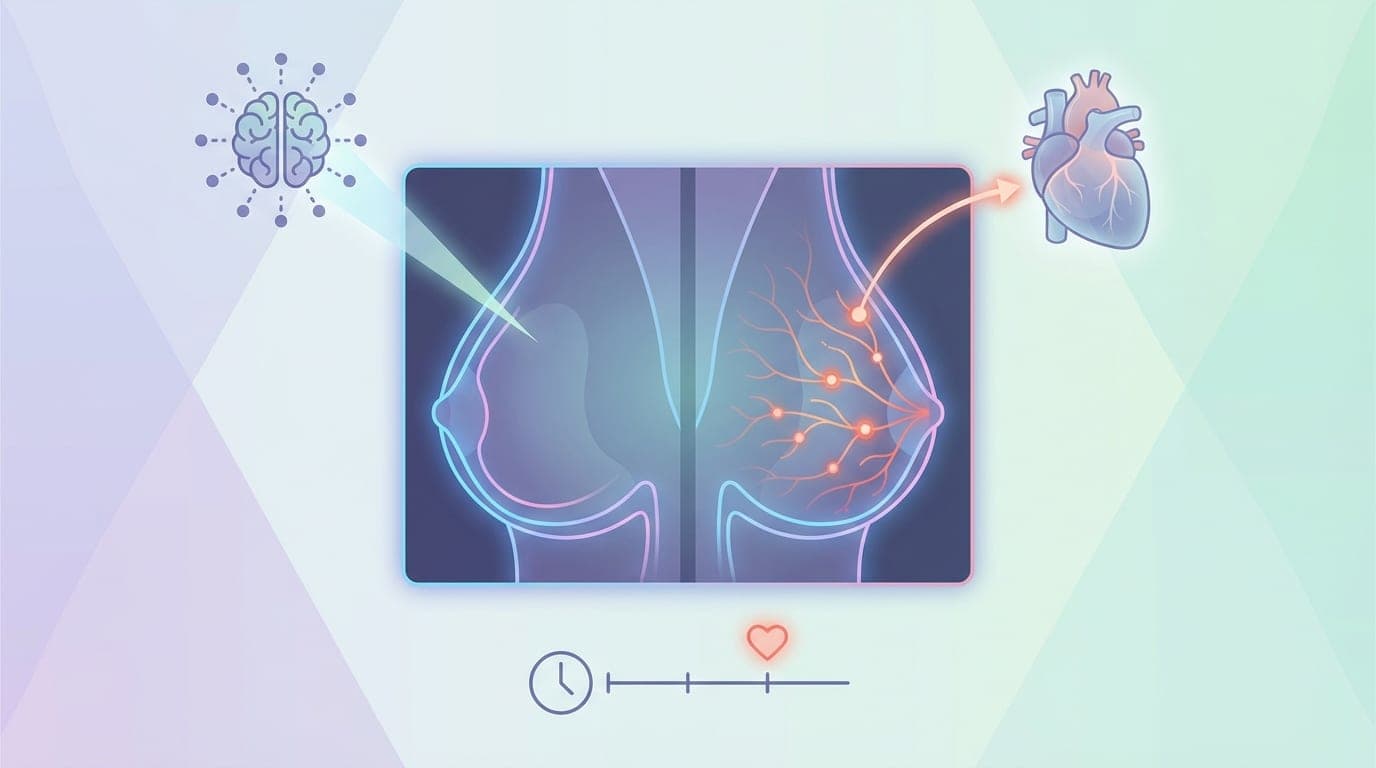
Heart disease remains the leading cause of death among women worldwide, yet it is frequently underdiagnosed. A groundbreaking study published in the European Heart Journal on March 9, 2026, offers a promising solution. Researchers have demonstrated that artificial intelligence can analyse routine mammograms to predict cardiovascular risk. Led by Dr. Hari Trivedi of Emory University, this research could fundamentally reshape preventive healthcare for women.
The study examined 123,762 women aged 40 to 79 across two major United States health systems. None of the participants had been previously diagnosed with cardiovascular disease. AI software analysed standard mammogram images to quantify breast arterial calcification, a calcium buildup within breast arteries. The algorithm then categorised participants into four groups: no calcification, mild, moderate, or severe.
The findings were striking in their implications for clinical practice. Women with mild calcification were approximately 30 percent more likely to experience serious cardiovascular events. Those with moderate calcification faced a risk exceeding 70 percent higher than the baseline group. Remarkably, women with severe calcification confronted a risk two to three times greater than those without deposits.
What distinguishes this approach is its capacity to identify risk even in younger demographics. Results held true for women under 50, a cohort traditionally considered low-risk for cardiac events. Furthermore, the associations persisted after researchers accounted for conventional risk factors such as diabetes and smoking. This suggests that breast arterial calcification constitutes an independent marker of cardiovascular vulnerability.
The public health ramifications of this discovery are considerable. Approximately 40 million mammograms are performed annually in the United States alone. Integrating AI-based cardiovascular screening into existing programmes would require no additional infrastructure or radiation exposure. Policymakers and clinicians now face the task of establishing protocols that transform this incidental finding into actionable prevention.