
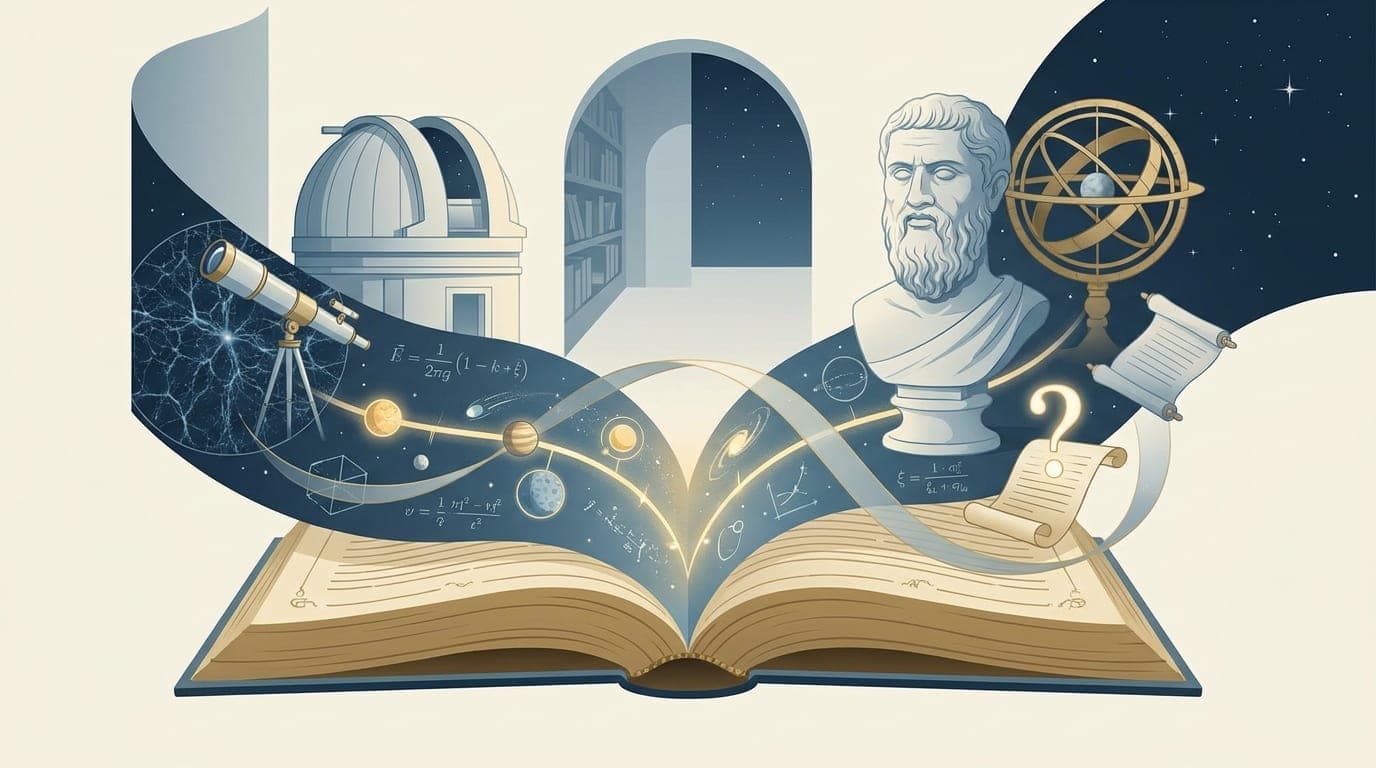
What is the universe? Is it a thing or a set of ideas? These are the deep questions that historian Helge Kragh explores in his new book. Published by Reaktion Books in 2026, the work is titled Universe: A Guide to Everything. A recent review in Nature describes it as a philosophical take on cosmic history. The reviewer calls the book inspiring but also incomplete.
Kragh is an acclaimed historian of science at the University of Copenhagen. His book traces how our conceptual models of the universe have evolved. It covers ideas from the ancient Greeks to modern cosmology. For example, Aristotle believed that planets moved around Earth in spheres. Later, Copernicus proposed that the Sun was at the centre instead.
The book also addresses what the universe actually means as a concept. Kragh explains that the universe includes all matter, energy, space, and time. He argues that it is not simply an object we can observe from outside. Because light travels at a fixed speed, we can only see part of it. The visible universe extends about 46 billion light years and contains billions of galaxies.
Reviewer David DeVorkin found the account lucid, coherent, and captivating. However, he noted that the concepts become more challenging as they grow complex. The book argues that many cosmic mysteries may remain permanently unsolved. If scientists relied only on data, they would miss the philosophical foundations of cosmology. This perspective makes the book valuable for both scientists and thinkers.