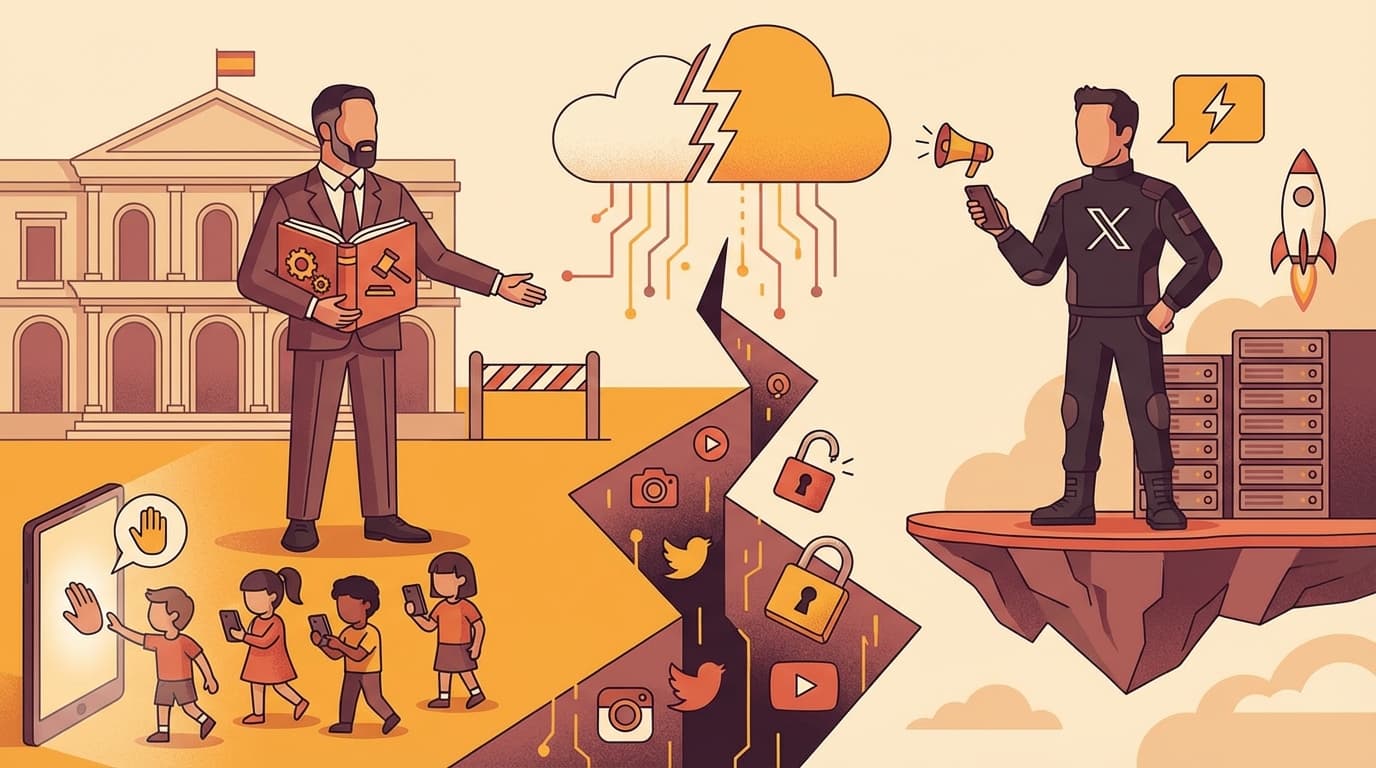
A heated confrontation has erupted between Spain's Prime Minister Pedro Sánchez and tech billionaire Elon Musk. Sánchez announced sweeping proposals at the World Government Summit in Dubai this week. He described social media platforms as a lawless digital ecosystem that had become dangerous. The proposals aim to ban children under 16 from accessing social media entirely. Musk, who owns the platform X, responded with aggressive personal attacks online.
The Spanish leader outlined five key measures designed to regulate digital platforms more strictly. One proposal would hold social media executives criminally liable for failing to remove harmful content. Another measure would make the algorithmic amplification of illegal content a new criminal offense. Sánchez also announced plans to investigate platforms including TikTok, Instagram, and Musk's AI tool Grok. He argued that governments must stop turning a blind eye to toxic content.
Musk, a self-described supporter of radical free speech, viewed the proposals as authoritarian overreach. He called Sánchez a tyrant and a traitor to the people of Spain. Spain's Justice Minister responded by accusing Musk of trying to undermine democracy. He warned that powerful tech figures now intervene directly in democratic politics. Telegram founder Pavel Durov also criticized the proposals, calling them steps toward total control.
This dispute reflects a broader pattern of confrontation between European governments and American tech companies. Australia, Britain, and France have already adopted or considered similar social media restrictions for minors. According to a 2025 poll, 82 percent of people in Spain support banning social media for young children. Had governments regulated platforms earlier, the current tensions might have been less severe. The outcome of this battle could reshape digital regulation worldwide.