
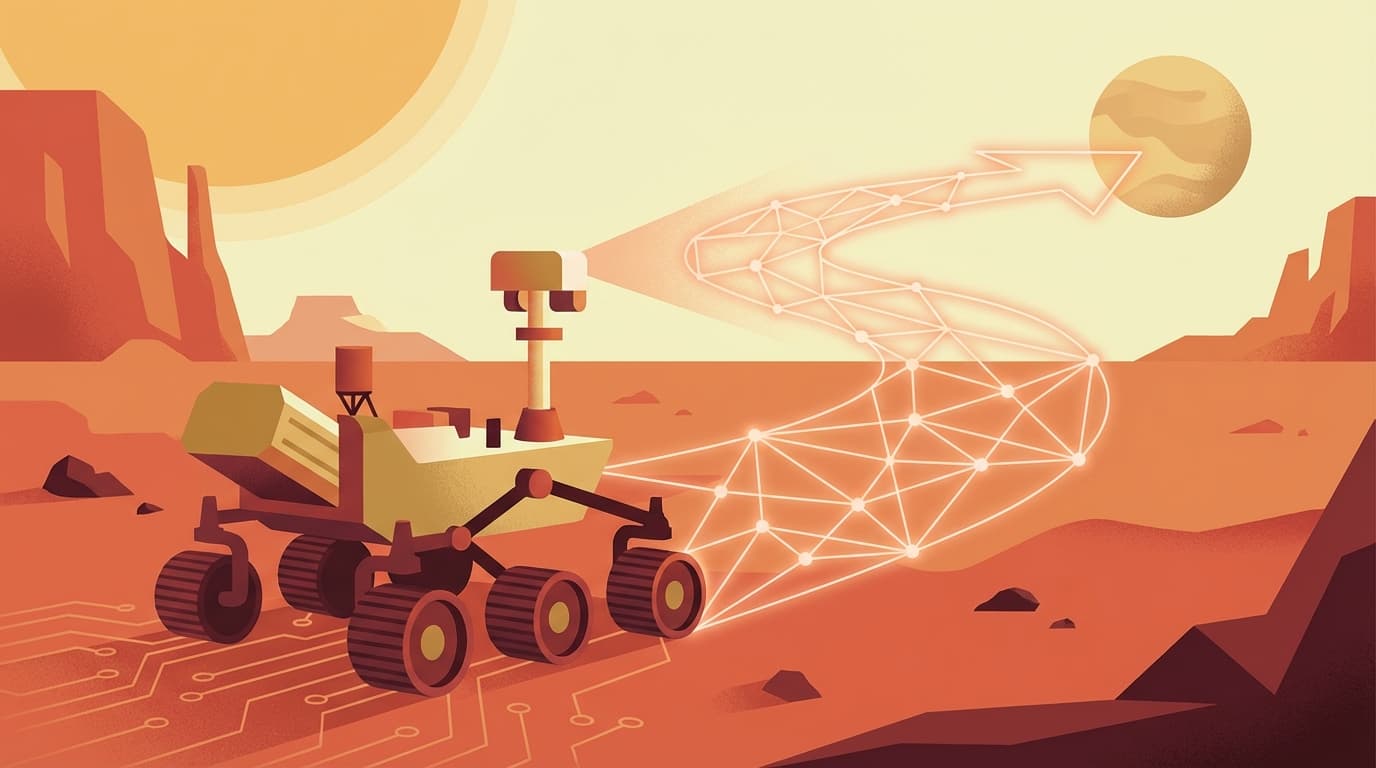
Driving a car on Mars is much harder than driving one on Earth. Radio signals take between four and twenty-four minutes to reach the Red Planet. This means real-time remote control of the rover is completely impossible. Until now, human planners carefully studied photos to create safe routes. They had to avoid dangerous obstacles like boulders and deep sand traps.
In December 2025, NASA tried something new with its Perseverance rover. Engineers at the Jet Propulsion Laboratory used an AI system to plan routes. The rover successfully completed two drives of 689 and 807 feet. Before sending commands to Mars, engineers tested the routes against 500,000 variables. They used a digital twin, which is a virtual copy of the rover.
The $2.7 billion rover already has some autonomous driving abilities on its own. It can steer around small obstacles using real-time data from the surface. However, the decision about where to go was always made by humans. This experiment was different because AI handled that complex planning task. NASA said the AI created waypoints that human planners would normally choose.
Matt Wallace, a manager at JPL, called this a game-changing technology for exploration. He believes intelligent systems could work in rovers, helicopters, and drones someday. If NASA used this technology widely, missions would become faster and more efficient. This could help establish a permanent human presence on the Moon eventually. It might even help take humans to Mars and beyond in the future.